How Is 3D Animation Software Powering Real‑Time Worlds?
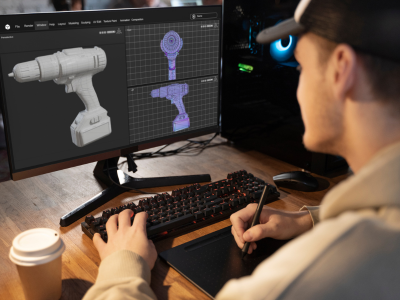
Have you ever wondered how a digital character can make you feel emotional pain, or how a virtual tour of a building can feel so real that you try to lean against the walls? We are no longer living in a world of flat images and static sketches. A silent revolution is happening behind every screen you touch. 3D Animation Software has escaped the confines of Hollywood elite studios to become the heartbeat of global creativity.
In this guide, we dive into the high-stakes world of immersive visuals. You will discover how real-time workflows are killing the dreaded wait times of the past, how artificial intelligence is doing the heavy lifting for artists, and why industries from heart surgery to high fashion are suddenly obsessed with three-dimensional depth. The line between what is filmed and what is rendered is vanishing. Are you ready to see what lies on the other side?
Why 3D Animation Software Matters for Business Growth
3D animation software expands the possibilities for brand storytelling and product development. Businesses are moving away from flat, two-dimensional images toward interactive 3D models that customers can manipulate in real-time. This shift is particularly evident in the retail sector. Here, virtual try-ons and photorealistic product renders have significantly reduced return rates and boosted buyer confidence.
Leaders in media and manufacturing now view 3D animation software as a strategic asset. It allows teams to prototype products virtually, saving thousands in physical sampling costs. Recent research highlights that over 50% of brand campaigns now feature 3D elements to increase digital visibility. The ability to create high-fidelity visuals faster than ever is turning small creative boutiques into global competitors.
The Evolution of Rendering and Real-Time Workflows
Traditional rendering used to take days or even weeks of computer processing. If an artist made one small mistake, the entire cycle had to restart. Modern 3D animation software has solved this bottleneck through real-time rendering engines. Tools that were once exclusive to the gaming industry are now used in virtual production sets. This allows directors to see finished digital backgrounds behind actors while they are still on stage.
This evolution means that 3D animation software is now about speed as much as it is about beauty. Real-time feedback loops allow for instant iteration and faster client approvals. In a market where content is consumed at a lightning pace, the efficiency of these workflows is the difference between leading the trend or falling behind. We are seeing a transition from static art to living, breathing digital environments.
AI-Driven Features: Automating the Mundane
Artificial Intelligence has integrated deeply into the creative pipeline. Modern 3D animation software now includes AI-powered tools for auto-rigging, the process of adding a digital skeleton to a character. What used to take a technical artist hours of manual clicking can now be achieved in minutes with high precision. This allows creators to focus on the emotional nuance of their work rather than repetitive technical tasks.
AI also assists in procedural generation, where the software automatically creates vast landscapes or complex crowds. For a developer building a virtual world, this means they can generate a whole forest by setting a few parameters. The result is a more accessible entry point for independent creators who previously lacked the budget of major studios. These innovations are democratizing high-end production across the globe.
Industry Use Cases: From Healthcare to Architecture
3D animation software is making significant waves in the medical field. Surgeons now use 3D simulations to rehearse complex procedures on a digital twin of a patient before entering the operating room. This level of preparation improves patient outcomes and reduces surgical risks. Educational platforms also use 3D visuals to explain microscopic cellular processes that are impossible to film with a camera.
In architecture and construction, the software provides more than just a pretty picture. It allows clients to walk through a building before the first brick is laid. Changes to lighting, materials, or layout can be made instantly, preventing costly errors during the build phase. This build once, render often philosophy is saving the construction industry billions in wasted resources every year.
The Rise of Global Creative Hubs
North America is currently leading the 3D animation software market. This is largely due to the concentration of major film and gaming studios in the United States and Canada. However, the Asia-Pacific region is experiencing the fastest growth. Countries like India and China are transforming from outsourcing centers into hubs for original intellectual property and high-end visual effects.
European markets are focusing heavily on green animation and data security. Studios there are adopting cloud-based workflows that optimize energy consumption during heavy rendering tasks. This regional diversity ensures that the software evolves to meet a wide variety of cultural and regulatory needs. No matter where you are, the tools to tell your story are becoming more localized and accessible.
Practical Design Choices for Creative Teams
- Site Readiness: Ensure your hardware meets the GPU-accelerated requirements of modern engines. A powerful graphics card is more important than a fast CPU for real-time work.
- Cloud Integration: Use cloud-based render farms for final output. This allows your team to keep working on new tasks while the heavy lifting happens elsewhere.
- Standardize Formats: Adopt open standards like Universal Scene Description (USD). This makes it easy for different software packages to talk to each other without losing data.
- Prioritize Training: Invest in real-time skill sets. The demand for artists who understand game engines is currently outstripping the supply of traditional animators.
Strategy for the Next 12 Months
Start by identifying one high-value area for 3D integration. Whether it is a new product launch or an internal training module, use 3D Animation Software to create a more engaging experience. Capture metrics on user engagement and conversion rates compared to traditional assets. As the return on investment becomes clear, scale your efforts. The transition to a 3D-first world is not a future trend; it is the current standard for digital communication.