WHO Advances Health Cooperation in Saudi Arabia
Pune, India | January 16, 2026
Riyadh, Saudi Arabia — The World Health Organization Regional Director for the Eastern Mediterranean, Dr Hanan Balkhy, concluded an official visit to Saudi Arabia. She advances health cooperation through high-level meetings that strengthen regional health systems while promoting equitable access to medical products. The visit, held from January 11 to 14, brought together senior government leaders and WHO officials to discuss priorities affecting millions of people across the Eastern Mediterranean Region.
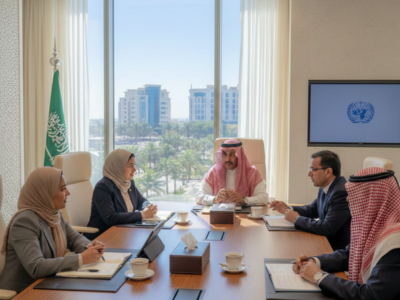
Dr Balkhy met officials from the Ministries of Health, Foreign Affairs, Finance, Energy, Sports, and Industry. She explored strategies to help Saudi Arabia and the WHO advance health cooperation efficiently. She emphasized that expanding equitable access to essential medicines and vaccines is vital for improving population health outcomes. Furthermore, she highlighted the importance of partnerships between governments and international organizations, ensuring sustainable, long-term progress across the region.
During meetings with H.E. Dr. Abdulrahman Al Rassi, Deputy Minister for International Multilateral Affairs, and H.E. Adel Al Jubeir, Minister of State for Foreign Affairs and Envoy for Climate, Dr. Balkhy discussed global health diplomacy. For instance, unified regional action is necessary to address pandemics, climate-related health risks, and inequitable access to medicines. Therefore, strategic partnerships remain crucial for tackling complex regional health challenges effectively.
A primary focus of the visit was the regional flagship initiative on equitable access to medical products. Dr Balkhy stressed resilient supply chains, local pharmaceutical production, and regulatory alignment across countries. The Eastern Mediterranean Region serves over 750 million people. Yet, it continues to face challenges in ensuring populations receive quality and affordable medical products. Consequently, the initiative aims to strengthen links between governments, industry partners, and international agencies to improve accessibility and affordability.
In discussions with H.E. Bandar Alkhorayef, Minister of Industry and Mineral Resources, Dr Balkhy explored how Saudi Arabia’s industrial capacity, Vision 2030, and the Global Supply Chain Resilience Initiative can support local medicine production. She also noted that expanding production reduces dependency on imports, improves supply predictability, and ensures better health outcomes for all countries. Moreover, such initiatives can strengthen regional resilience during emergencies.
“Access to medicines is not only a health issue; it is also an economic and security imperative for the Eastern Mediterranean Region,” Dr Balkhy said. Additionally, she explained that aggregated demand, trusted regulatory pathways, and long-term investment can make regional medical markets more competitive. These approaches also ensure equitable access for underserved populations, which remains a key priority.
Beyond pharmaceutical access, Dr Balkhy engaged with H.E. Abdulrahman Al Gwaiz, Acting Deputy Minister for Sustainability and Climate Change. They discussed how coordinated planning can protect essential health services from climate hazards, such as heatwaves and storms. These discussions underscored the growing recognition that climate action and health outcomes are deeply connected. Furthermore, joint efforts are urgently needed to safeguard vulnerable populations.
The Regional Director also met H.E. Adwa AlArifi, Deputy Minister of Strategic Planning and Investment at the Ministry of Sport. They explored how major sporting events can encourage physical activity, healthier lifestyles, and tobacco-free environments. Consequently, this collaboration supports global initiatives to reduce noncommunicable diseases and fosters healthier communities across the Eastern Mediterranean Region.
Digital cooperation remained a priority when Dr Balkhy met Ms Deemah AlYahya, founding Secretary-General of the Digital Cooperation Organization. Moreover, they discussed how digital tools and innovative solutions can build inclusive and resilient health systems. In addition, these tools accelerate progress toward universal health coverage and strengthen overall health service delivery.
The visit also built on outcomes from the 2024 High-Level Strategic Dialogue between Saudi Arabia and the WHO. It reinforced joint efforts to strengthen emergency preparedness and response capacities. In addition, engagements with H.E. Abdulaziz Al Rumaih, Vice Minister of Health for Planning and Development, solidified commitments to advancing health cooperation. These initiatives aim to translate policy into measurable community health benefits across the region.
In closing, Dr Balkhy said the visit reaffirmed the strong partnership between WHO and Saudi Arabia. She emphasized the Kingdom’s growing role in regional and global health leadership. She stressed that collaboration, strategic investment, and shared vision are essential for improving health outcomes, expanding access to medical products, and enhancing health systems for future generations.
This visit marks a significant step in advancing health cooperation between WHO and Saudi Arabia. It sets the stage for deeper engagement and tangible progress in public health across the Eastern Mediterranean Region.