What drives users to choose over the top content over cable?
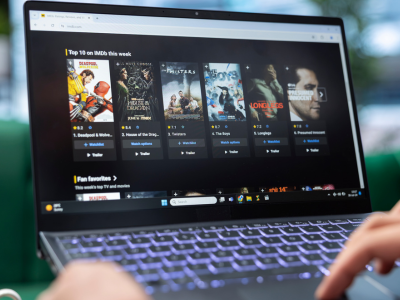
The way we consume media has fundamentally changed. If you are reading this, you likely used an Over the top service this morning, perhaps to check a news clip, stream a podcast, or watch a show during your commute. In 2026, Over the top streaming is no longer just a “cord-cutting” alternative; it is the dominant global standard for entertainment. By bypassing traditional cable and satellite controllers, these platforms have handed the keys to the kingdom back to the audience. This guide explores the technical brilliance and strategic shifts that make modern streaming feel so effortless.
Over The Top (OTT): The New Digital Frontier
The current Over the top landscape is defined by maturity and mass adoption. The Insight Partners’ latest research shows that the global Over The Top Market was valued at US$138.49 billion in 2025 and is projected to reach US$522.60 billion by 2034. This represents a steady compound annual growth rate (CAGR) of 15.9%, driven by the rapid expansion of 5G and the proliferation of smart devices in emerging markets.
This overview reveals that Over the top media is now a professionalized ecosystem built on three pillars: Hybrid Monetization (combining ads with subscriptions), Cross-Device Accessibility, and Cloud-Based Scalability. Major players like Netflix and YouTube TV now share the space with “Skinny” bundles and FAST (Free Ad-supported Streaming TV) channels, offering a dizzying array of choices that cater to every niche.
Winning the Battle for Your Screen
A deep dive into Over the top strategy shows that the “Streaming Wars” have shifted from a race for total subscribers to a race for “Average Revenue Per User” (ARPU). In 2026, successful platforms are those that master the following strategic areas:
- First-Party Identity: With the death of third-party cookies, OTT platforms use logged-in viewing data to provide hyper-accurate ad targeting.
- Operational Excellence: Brands are using AI to automate the “boring” parts of streaming, like generating subtitles in 50 languages or creating 5-second teaser clips for social media.
- Content Discovery: As libraries grow, the “Search Bar” is being replaced by AI Agents that understand conversational requests like, “Find me a lighthearted sci-fi movie I haven’t seen yet.”
How Over The Top Streaming Works
Technically, Over the top streaming is a feat of engineering. Unlike cable, which sends a constant signal to your home, OTT breaks content into tiny “IP packets” that travel across the public internet.
The Role of Adaptive Bitrate (ABR)
Ever notice how a video starts slightly blurry and then snaps into sharp focus? That is Adaptive Bitrate Streaming in action. Standards like HLS (Apple) and MPEG-DASH (Google) allow the player to detect your internet speed in real-time. If your Wi-Fi dips, the player automatically requests a smaller, lower-quality packet so your show doesn’t buffer.
The Power of the CDN
To prevent a user in London from waiting for a server in California, OTT providers use Content Delivery Networks (CDNs). These are global networks of servers that keep a “copy” of the video close to you, ensuring lightning-fast load times.
AI and the NVIDIA-Powered Future
In 2026, hardware and software have merged to create “Cinematic-Quality Streaming.” NVIDIA’s Blackwell architecture has revolutionized the space, enabling 5K resolution at 120 frames per second with negligible latency.
- AI-Enhanced Graphics: Tools like DLSS 4 (Multi-Frame Generation) use AI to “draw” extra frames, making even low-bandwidth streams look like native 4K.
- Low-Latency Gaming: This same tech powers cloud gaming, allowing you to stream AAA games to your Fire TV stick as if you had a $3,000 PC in your living room.
Content Security and DRM
Premium content needs a digital vault. To protect the multi-billion dollar rights of films and live sports, Over the top platforms use Digital Rights Management (DRM).
- Google Widevine: This DRM protects 5 billion devices and ensures that no one can “rip” or steal a 4K stream. It operates in a “Trusted Execution Environment” (TEE) within your device’s hardware.
- Microsoft PlayReady: A similar standard used to secure high-value content across Windows, Xbox, and smart TVs.
Regulation and Measurement
As Over the top platforms grow, so does the eyes of the regulators. In late 2025 and 2026, agencies like the FCC clarified that OTT content must follow certain rules, even though they don’t regulate it exactly like “Broadcast TV.”
- Accessibility: The FCC mandates that OTT platforms provide high-quality closed captioning and audio descriptions.
- The MRC Standard: The Media Rating Council (MRC) now enforces strict rules on how “Views” are counted. For example, if your TV is on but you’re not in the room, AI sensors can now determine whether the “Ad Impression” was actually viewed.
Top Questions About Over The Top Streaming
What is the difference between OTT and CTV?
Think of it this way: OTT delivers the content over the internet, while CTV (Connected TV) is the device you use to watch it, like a Roku or Smart TV.
Is OTT safe for my children?
Yes. In 2026, the three-tier regulation mechanism (self-regulation, industry oversight, and government checks) ensures that platforms use strict age-based classification.
Why is my streaming quality dropping?
Usually, this is a local bandwidth issue. Your OTT player is using “Adaptive Streaming” to prevent the video from stopping entirely by lowering the resolution.
Final Takeaway: The Stream of Choice
The Over the top revolution shows no signs of slowing down. The industry thrives on making complexity feel simple. By embracing AI enhancements, advanced encoding, and global cloud networks, OTT becomes more powerful and personalized every year. Whether you are a creator looking to build an audience or a viewer looking for the best seat in the house, the “Top” is exactly where you want to be.
We built this comprehensive analysis using primary sources from Google Developer documentation, NVIDIA newsrooms, and official FCC guidance. We avoid recycled market gossip, focusing instead on the actual code, hardware, and laws shaping the industry. By following these verified technical standards, we provide a trustworthy roadmap for the future of digital media.