BBC–YouTube Content Deal: Clicking on the Beeb
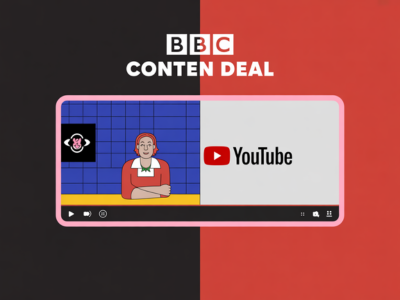
The British media landscape changed forever on January 16, 2026, with a massive announcement from the BBC. Specifically, the national broadcaster is currently moving to strike a revolutionary BBC–YouTube content deal very soon. This agreement signals a historic shift away from the corporation’s traditional “iPlayer-first” distribution philosophy. In terms of strategy, the BBC will now produce “bespoke” content designed specifically for the YouTube audience. Producers will prioritize the social platform’s algorithm before releasing shows on the corporation’s own streaming apps. Accordingly, for this reason, the move aims to recapture the attention of Gen Z and younger viewers. Recent viewership statistics prove that YouTube has already surpassed the BBC in total audience reach. In December 2025, the American platform recorded 51.9 million monthly viewers across the United Kingdom.
In contrast, the BBC’s various channels and services reached 50.8 million people during that same period. Thus, for reach, the BBC–YouTube content deal is a vital strategic necessity. Furthermore, the corporation faces immense pressure from a $10 billion lawsuit filed by President Donald Trump. He claims the BBC defamed him by splicing together disparate parts of a 2021 rally speech. Resulting from this legal firestorm, the broadcaster’s top leadership resigned just a few weeks ago. Because of these financial risks, the BBC must secure new international revenue streams immediately. Significantly, the new deal allows the commercial arm to monetize content through YouTube’s sophisticated ad network. While the license fee remains under threat, this global advertising revenue could prove essential for survival.
Regarding the actual programming, the BBC plans to focus on entertainment, sports, and news. For instance, in this context, the corporation will develop new formats tailored for the “fandom-first” digital era. Moreover, in addition to this, the partnership will prioritize fighting misinformation through high-quality digital journalism. In accordance with the plan, the BBC will hire influencers to help deliver these news updates. Effectively, in terms of brand perception, the broadcaster wants to shed its image as a legacy entity. Instead, by means of this pivot, it aims to become a versatile and platform-agnostic media house. Consequently, the BBC–YouTube content deal represents a bold bet on the future of digital storytelling. Significantly, it acknowledges that audiences no longer wait for scheduled television broadcasts to watch their favorite shows.
Similarly, in the same way, international broadcasters are already following this path to reach diverse audiences. For example, to illustrate this, France Télévisions and RTVE have partnered with global giants like Netflix. Nevertheless, in spite of previous institutional hesitation, the BBC is now ready to join this trend. Therefore, in light of these market forces, the board views this partnership as an essential evolution. By formalizing the BBC–YouTube content deal, the corporation secures a foothold on the world’s largest video platform. Moreover, this move provides the BBC with advanced data analytics for tracking viewer behavior. Consequently, for the purpose of optimization, the corporation can refine its content to match user preferences. Ultimately, this approach will help the BBC maintain its status as a global leader in content.
Significantly, the deal will also open the massive BBC archive to a new generation of global fans. Specifically, through this agreement, older series could generate millions in passive ad revenue from international markets. In view of the current budget shortfall, every extra pound is critical for the broadcaster’s future. Furthermore, on top of this, the deal strengthens the BBC’s relationship with Google and Alphabet Inc. In order to succeed, the corporation must successfully navigate the complex world of big tech partnerships. Accordingly, for this reason, the BBC–YouTube content deal is more than just a distribution contract. It is a fundamental redesign of how the British public service broadcaster functions in 2026. Therefore, as a final point, the success of this deal will define the next decade.
Taking everything into account, the BBC is finally choosing to meet its audience on their terms. Because the broadcaster must remain relevant, it is adapting its production methods to suit the internet. Significantly, for this reason, the BBC–YouTube content deal marks a definitive turning point for the organization. While the legal battle with Donald Trump continues, the BBC is looking toward a digital-first future. Effectively, by way of this strategy, the corporation ensures that its voice remains heard globally. Ultimately, in conclusion, this partnership proves that innovation is the only way to survive a shifting media world. Therefore, as a final thought, the BBC is now fully committed to the YouTube ecosystem. In the same way, the corporation will continue to evolve as a modern, global broadcaster.