Siemens Accelerates Industrial AI with Twin Innovations
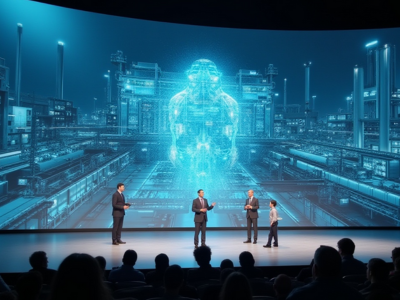
New Delhi, India, January 15, 2026 – At CES 2026 in Las Vegas, Siemens unveiled new technologies to drive the industrial AI revolution. The company’s keynote, led by President and CEO Roland Busch, showed how artificial intelligence is reshaping industries worldwide. Siemens presented solutions that make factories smarter, supply chains faster, and healthcare more efficient.
Busch compared the rise of industrial AI to the impact of electricity. He said AI is no longer just a feature but a foundation for future innovation. Siemens is embedding intelligence across design, engineering, and operations. This approach helps businesses achieve speed, quality, and efficiency at the same time.
A major highlight was Siemens’ expanded partnership with NVIDIA. Together, they are building the Industrial AI Operating System. This system will reinvent how companies design, engineer, and operate physical systems. The first fully AI-driven adaptive manufacturing site will launch in Erlangen, Germany, in 2026. NVIDIA will provide AI infrastructure and simulation libraries, while Siemens contributes hardware and expertise.
Siemens also introduced the Digital Twin Composer, available mid-2026 on the Siemens Xcelerator Marketplace. The software allows companies to create 3D digital twins of products, plants, and processes. PepsiCo is already using it to simulate upgrades to U.S. facilities. Early results show a 20 percent increase in throughput and reduced capital expenditure. By recreating machines and operator paths with physics-level accuracy, PepsiCo can identify issues before making physical changes.
Another announcement was the launch of nine industrial copilots. These AI-powered assistants will streamline operations across the value chain. Integrated into platforms like Teamcenter, Polarion, and Opcenter, they help navigate product data, automate compliance, and optimize manufacturing. Siemens emphasized that these copilots will be available to businesses of all sizes through the Xcelerator Marketplace.
Siemens also showcased innovations in life sciences, energy, and manufacturing. Through its acquisition of Dotmatics, Siemens is integrating research data into AI-driven drug discovery. Scientists can now test molecules virtually and accelerate therapies by up to 50 percent. In energy, Commonwealth Fusion Systems is using Siemens’ technologies to advance fusion machines, aiming to deliver clean and limitless energy. On the shop floor, Siemens is collaborating with Meta to bring industrial AI to Ray-Ban AI Glasses, offering workers real-time guidance and safety insights.
Visitors at CES experienced Siemens’ technology firsthand. PepsiCo demonstrated its digitalized supply chain, while Haddy showcased AI-powered 3D printing for sustainable manufacturing. Siemens also launched its eXplore tour, an interactive mobile experience housed in an 18-wheel vehicle. The tour will travel across the U.S., highlighting how Siemens technologies drive efficiency and innovation.
For the first time, Siemens hosted an autonomous vehicle experience featuring its PAVE360 Automotive technology. This system-level digital twin accelerates the development of software-defined vehicles by simulating complex environments. It bridges the gap between virtual design and real-world performance.
Busch stressed that Siemens is delivering AI-native capabilities across industries. He said these tools help customers anticipate issues, accelerate innovation, and reduce costs. Jensen Huang, founder and CEO of NVIDIA, added that generative AI and accelerated computing are turning digital twins into active intelligence. Together, Siemens and NVIDIA are closing the gap between ideas and reality.
With revenue of €78.9 billion in fiscal 2025 and a workforce of 318,000, Siemens is not only leveraging its vast scale but also strategically channeling it to make industrial AI both accessible and impactful. By seamlessly combining trusted partnerships, deep domain knowledge, and cutting-edge technology, the company is steadily reshaping industries while simultaneously driving measurable benefits for society. Moreover, at CES 2026, Siemens made it unmistakably clear that industrial AI is no longer a future concept; rather, it is already here, powerful, practical, and fully ready to transform everyday life.