What Makes Subsea Cable Vital for Global Connectivity?
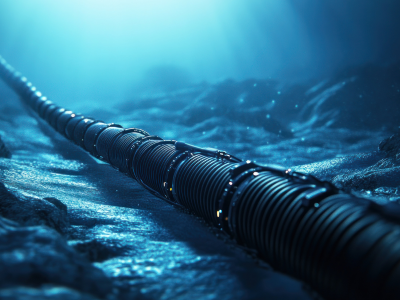
Have you ever wondered what happens to your data when it vanishes into the “cloud”? Imagine a silent web of glass and steel stretching across the dark, crushing depths of the ocean floor. Right now, thousands of miles beneath where any human can breathe, a hidden network is pulsing with the heartbeat of the global economy. Did you know that 99% of all international data travels through threads no thicker than a garden hose?
But here is the question that should keep you awake: What happens if these fragile lifelines are cut? The secret most people don’t realize is that the entire modern world is dangling by a thread. Subsea Cable is no longer just a technical feat; it is the only thing standing between us and a total digital blackout. The sheer scale of this underwater network is staggering. While satellites often capture the public’s imagination, they handle only a tiny fraction of our data. The real heavy lifting happens in the deep.
Subsea Cable: A Global Pulse in 2026
The current state of Subsea Cable systems is defined by a shift toward “Essential Infrastructure” status. What began as a novelty in the 19th century has surged into a global industry valued at over $25 billion as of early 2026. This growth is fueled by a desperate need to support AI, cloud computing, and high-frequency financial trading. Today, hyperscalers like Google, Meta, and Amazon are the primary investors in these massive undersea projects.
We are seeing a move toward “Space-Division Multiplexing” (SDM). This technology allows a single Subsea Cable to carry massive capacity using multiple fiber pairs. For most nations, 2026 is the year these links moved from commercial assets to “Critical Sovereign Infrastructure.” These systems provide the “digital ground truth” for global finance. They carry over $10 trillion in transactions every single day.
Why the Sea Floor is the New Digital Frontier
A deep dive into Subsea Cable infrastructure reveals that the industry is at a critical strategic tipping point. The “digital divide” is no longer just about who has a phone. It is about which regions have the fastest undersea links. Analysis from the International Telecommunication Union (ITU) shows that countries with diverse cable landings see a direct boost in per-capita GDP. In a world where a millisecond of latency can lose a trade, the path of the cable is the difference between prosperity and isolation.
The Strategic Competitive Edge:
- Latency Supremacy: New systems like the “BiFrost” cable connect North America to Asia, shaving vital milliseconds off transit times.
- Economic Resilience: Doubling Subsea Cable capacity can lower internet prices by up to 50% in emerging markets.
- Scientific Innovation: Modern “SMART” cables now include sensors. These detect underwater earthquakes and volcanic eruptions in real-time.
- Route Diversity: Operators are avoiding crowded chokepoints like the Red Sea. They are building new “Great Southern Routes” for better security.
The Standards Governing the Depths
You cannot deploy Subsea Cable technology without a firm grasp of the rules. To build a program that regulators and citizens trust, you must follow established safety and legal frameworks.
- FCC and U.S. Licensing: The FCC issues “Cable Landing Licenses” under the 1921 Act. In 2026, new rules prioritize “Trusted Technology” and strictly limit equipment from foreign adversaries.
- ITU-T G-Series Standards: The ITU defines the mechanical and optical limits for cables. Recommendations like ITU-T G.978 ensure fibers survive the extreme pressure of the deep ocean.
- NIST AI Risk Management Framework: Modern cables use AI to monitor for faults. The NIST AI RMF ensures these autonomous monitoring systems are secure and reliable.
- Environmental Protection (NOAA): Agencies like NOAA regulate any project in National Marine Sanctuaries. They ensure the laying process does not harm sensitive coral reefs or marine migrations.
Real-World Victories in the Global Web
The “Hyperscaler” Revolution
Google and Meta are no longer just buying space on cables; they are building them. Google’s “Equiano” cable connects Western Europe to South Africa with 150 Terabits of capacity. This private investment ensures their cloud services never skip a beat.
Resilient Island Connectivity
In 2026, island nations like Tonga and Fiji are using the Subsea Cable to bridge the gap in digital health and education. By having at least two separate landing points, these nations ensure that one accidental anchor drag does not cut them off from the world.
What Threats Lurk in the Depths?
Despite their steel armor, a Subsea Cable is surprisingly vulnerable. The International Cable Protection Committee (ICPC) records roughly 200 repairs worldwide every year.
- Human Activity: Fishing trawlers and dragging anchors cause 70% of all cable faults.
- Natural Disasters: Underwater landslides triggered by earthquakes can snap multiple lines at once.
- Sabotage Risks: European and U.S. reports highlight growing risks from intentional tampering. This is driving a massive push for better monitoring and rapid-repair fleets.
Practical Steps to Plan a Subsea Cable Project
- Map for Diversity: Never rely on a single route. Ensure your system has “branching units” to reroute traffic if a main line is cut.
- Align with ITU Standards: Use ITU-T G.9730.2 for SMART cable sensing. This allows your cable to act as a scientific tool while moving data.
- Secure Your Landing: The most vulnerable part of the cable is the shore. Use “Horizontal Directional Drilling” to bury it deep under the beach.
- Audit Your Supply Chain: Follow the EU AI Act and FCC guidelines to ensure your repeaters and terminal equipment are from trusted vendors.
Final Take: A New Era of Trust
The Subsea Cable evolution is about one thing: resilience. Whether it is the speed of a bank trade or the reliability of a video call, these cables are the silent fixers. By 2026, the most successful nations will be the ones that protect their underwater links. Success demands strong governance, transparent licensing, and a focus on route diversity. With these steps, your network won’t just survive until 2030; it will lead the way.
Answers to Your Top Questions
How long does a Subsea Cable last?
Most systems have a design life of 25 years. However, they are often retired early when newer, faster technology makes them economically obsolete.
Do satellites replace these cables?
No. Satellites handle less than 1% of international data. They lack the capacity and speed of fiber optics.
Are these cables safe for the environment?
Yes. Cables are chemically inert. Reports from UNEP-WCMC show that they have a very small footprint on the seafloor.