Edge AI Chips: Will Micro‑Modules Replace Cloud AI?
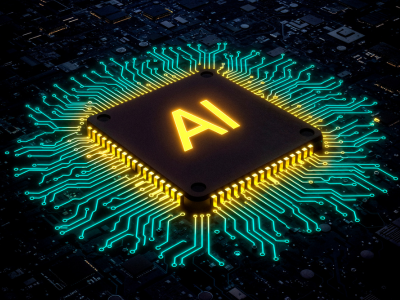
Have you ever wondered how your smart camera recognizes a package instantly? In the past, devices sent private data to a massive server farm just to “think.” However, in 2026, the brain has moved into the palm of your hand. Edge AI Chips & Micro-Modular AI Hardware are now rewriting the rules of technology. Specifically, they bring lightning-fast, private intelligence directly to the devices we use every day.
Gone are the days of loading bars and laggy responses. Instead, we are entering a new era of instant processing. Consequently, your toaster, your car, and even your glasses can now process complex information offline. This shift represents a fundamental change in how the digital world operates. In this guide, we will dive into the tiny silicon powerhouses making this possible. Furthermore, we will explore how Edge AI Chips & Micro-Modular AI Hardware turn “dumb” objects into brilliant assistants.
What Are Edge AI Chips & Micro-Modular AI Hardware?
To understand the future, we must look at the hardware itself. An Edge AI chip is a specialized piece of silicon. It is designed to run artificial intelligence locally. Unlike old processors, these chips are purpose-built for heavy AI math.
Edge AI Chips & Micro-Modular AI Hardware allow a device to perform “inference.” This is the act of making a decision right where the data is born. When combined with micro-modular designs, these chips become incredibly versatile. For example, micro-modularity refers to tiny, swappable components like M.2 cards or USB sticks. These modules let engineers plug AI power into almost any product. Therefore, you can upgrade devices without redesigning the whole machine.
Why Miniaturization is the Key in 2026
In 2026, miniaturization is about more than just saving space. Sending every byte of data to the cloud is expensive and slow. Edge AI Chips & Micro-Modular AI Hardware solve this by keeping data on-device. As a result, this approach saves battery life and reduces bandwidth lag. Most importantly, it keeps your personal images and voice recordings private.
Leading Platforms Driving the Edge AI Revolution
Several tech giants have released groundbreaking platforms. These define the current state of Edge AI Chips & Micro-Modular AI Hardware. Each platform targets a specific niche, ranging from hobbyist drones to industrial robots.
1. Google Coral: The Power of the Edge TPU
Google’s Coral platform is a favorite for low-power vision tasks. Its “Edge TPU” is a tiny coprocessor. Surprisingly, it performs 4 trillion operations per second while using only 2 watts. Because it comes in tiny form factors, it is a gold standard for home security.
2. NVIDIA Jetson Orin: The Heavyweight Champion
For tasks that require massive muscle, the NVIDIA Jetson Orin is the go-to choice. It can deliver up to 275 TOPS of performance. While it uses more power, its ability to run generative AI is unmatched. Thus, it remains a cornerstone of modern Edge AI Chips & Micro-Modular AI Hardware strategy.
3. Qualcomm Snapdragon X Elite: The AI PC Hub
Qualcomm has changed the game for laptops. The Snapdragon X Elite features a dedicated Neural Processing Unit (NPU). This allows your laptop to act as a powerful edge node. Consequently, you can run large language models entirely offline and securely.
Micro-Modular Form Factors: Build, Swap, and Upgrade
One exciting trend in Edge AI Chips & Micro-Modular AI Hardware is the modular nature of the tech. You no longer have to throw away a device when models improve.
- USB AI Sticks: These are perfect for quick retrofits. You can plug them into old PCs for instant vision capabilities.
- M.2 and Mini-PCIe Cards: These are the hidden heroes inside smart kiosks. They provide high-speed connections without adding any bulk.
- System-on-Modules (SOM): For rugged use, SOMs combine the processor and memory into one durable brain. Afterwards, they can be easily replaced during a hardware refresh.
Energy, Thermal, and Trust: The Challenges of Tiny AI
Making a chip small is hard. However, keeping it cool is even harder. Edge AI Chips & Micro-Modular AI Hardware must operate in tight spaces without fans. Therefore, engineers use “quantization” to simplify AI models. This ensures they run efficiently without overheating the device.
Furthermore, trust is a major pillar of this technology. Because these chips process data locally, they are inherently more secure. Nevertheless, developers must still follow strict risk frameworks. This ensures these “tiny brains” don’t make biased or unsafe decisions in the real world.
Best Practices for Building with Edge AI
If you are a developer, these steps will help you master your hardware deployments:
- Quantize Your Models Early: Don’t wait until the end. Optimize your models for the best performance.
- Choose Modular Over Integrated: Use swappable modules. This keeps your product relevant as new chips hit the market.
- Prioritize Thermal Design: Even efficient chips generate heat. Use heat spreaders to maintain peak performance.
- Align with Safety Standards: Ensure your hardware meets industry certifications for automotive or medical use.
Where You’ll See These Chips in Your Daily Life
You might not see the silicon. Nevertheless, you will definitely feel the impact of this technology every day.
- Smart Appliances: Your washing machine now uses local AI to detect fabric types. Then, it adjusts the cycle to save water.
- Health Wearables: Modern rings use Edge AI Chips & Micro-Modular AI Hardware to monitor vitals. Most importantly, they do this without draining your battery.
- Connected Vehicles: Cars use tiny AI modules to fuse sensor data. Consequently, they make split-second safety decisions faster than any human.
Everything You Need to Know
Can these tiny modules really run complex AI?
Yes, they can. Due to specialized NPUs, these chips run advanced vision and audio models efficiently.
Is it expensive to add AI hardware to a product?
In 2026, the cost has dropped significantly. Entry-level accelerators now cost less than a few cups of coffee.
Does Edge AI work without the internet?
That is the best part. These chips are designed to work completely offline. Therefore, your device stays smart even in a basement.
What is an NPU vs. a GPU?
A GPU is great for graphics. In contrast, an NPU is specialized only for AI tasks. This makes it much more efficient.
Final Takeaway: The Future is Small
The rise of Edge AI Chips & Micro-Modular AI Hardware signals a shift toward decentralized intelligence. We are no longer tethered to the cloud. Instead, we are building a world where every object has logic. By embracing efficient designs, companies are creating faster and safer products. The future isn’t in a distant server. Rather, it is right here, inside the tiny chips that power our lives.