A Zero-Waste Skincare Routine Guide: The Gourd vs. The Plastic
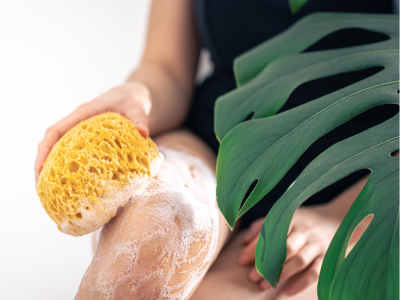
The modern bathroom is a sanctuary of self-care. We fill it with expensive serums and aromatic candles. Yet, a silent intruder hangs from your shower caddy. It is bright, neon, and incredibly cheap. We call it the bath pouf. This colorful ball of plastic mesh has become a household staple. Surprisingly, it is actually a synthetic imposter. It mimics a plant that humans have used for millennia. The plastic pouf is a bundle of microplastics. It masquerades as the very botanical wonder it aims to replace. Here comes the Zero-Waste Skincare Routine.
Today, the “Slow Beauty” revolution is gaining massive momentum. It stands in direct opposition to the microplastic crisis. Consumers are finally waking up to a startling realization. We spent forty years trying to improve a gourd with petroleum. We failed. Now, the market is moving backward to move forward. We are rejecting 1980s convenience in favor of 3,500 BC biology. It is time to discuss why the natural loofah is the ultimate hero of the zero-waste skincare routine.
The Great Plastic Masquerade
The story of the synthetic loofah is one of accidental irony. In the late 20th century, manufacturing exploded. We wanted everything to be cheaper and faster. Engineers looked at the fibrous skeleton of the Luffa aegyptiaca plant. They saw a perfect exfoliation tool. However, plants take time to grow. They require sun, water, and patience.
Industry leaders decided they could do better. They spun polyethylene into fine mesh ribbons. They bunched them into ruffles and added a hanging loop. These poufs were bright and bubbly. They looked like “better” versions of the brownish, irregular gourds found in nature. By the 1990s, the plastic pouf had conquered the globe.
But this convenience came with a hidden cost. Every time you scrub, that plastic mesh degrades. Tiny, invisible fragments break off and vanish down the drain. These are microplastics. They are too small for water treatment plants to filter. They flow directly into our oceans and into the food chain. We traded a biodegradable fruit for a permanent pollutant.
Understanding the Microplastic Crisis
The microplastic crisis is no longer a distant threat. Researchers now find these particles in the deepest ocean trenches. They also find them in human blood and placentas. Much of this pollution comes from “secondary microplastics.” These are fragments of larger items like your bath pouf.
When you use a synthetic sponge, you engage in a cycle of waste. These items harbor bacteria within their tight folds. Health experts suggest replacing them every three weeks. Consequently, billions of plastic poufs end up in landfills annually. They will sit there for hundreds of years, never truly disappear, and will only break into smaller, more toxic pieces.
The “Slow Beauty” movement asks us to pause. It challenges the “disposable” mindset of the modern age. It suggests that beauty should not come at the expense of the earth. This is where the transition to a zero-waste skincare routine becomes essential. We must look at the tools we use daily. We must evaluate their entire lifecycle.
The Return of the Botanical Hero
The natural loofah is a marvel of ancient engineering. It is not a sea creature. It is a subtropical gourd. When the fruit matures, the flesh disappears. A complex network of cellulose fibers remains. This is “Nature’s Original Patent.” It is durable, effective, and entirely compostable.
The resurgence of the natural loofah is a masterclass in market correction. For decades, we viewed the luffa as “old-fashioned.” Now, it is the height of eco-luxury. Why? Because it offers a performance that plastic cannot match.
The fibers of a real loofah are firm when dry. They soften beautifully when wet. They provide a deep exfoliation that removes dead skin cells effectively. Unlike plastic, these fibers do not trap moisture in a way that promotes mold. Most importantly, a natural loofah eventually returns to the earth. You can toss it in your backyard compost pile. It becomes soil for the next generation of plants. This is the definition of a circular economy.
Integrating a Zero-Waste Skincare Routine
Adopting a zero-waste skincare routine does not require a total lifestyle overhaul. It starts with simple, intentional swaps. The loofah is the perfect gateway product. It represents a shift from consumption to stewardship.
When you choose a natural loofah, you support agricultural biodiversity. Many small-scale farmers now grow heirloom luffa varieties. These farmers avoid the heavy chemicals used in plastic production. Therefore, your shower routine becomes a vote for a cleaner planet.
A zero-waste skincare routine also focuses on longevity. A natural loofah can last for months if dried properly. You can sanitize it by boiling it in water. You can even wash it in the dishwasher. Contrast this with the flimsy plastic pouf. The plastic version loses its shape and effectiveness almost immediately. The botanical version holds its integrity. It honors the “slow” in “slow beauty.”
The Economics of Going Backward
It is fascinating to watch the market pivot. Major retailers are now stocking natural sponges again. They are responding to a shift in consumer psychology. People no longer want neon-colored waste. They want textures that feel real. They want products with a story.
This “backward” movement is actually a sophisticated leap forward. We are using modern supply chains to distribute ancient solutions. We are applying 21st-century ethics to 3,500 BC technology. This creates a fascinating economic niche. The loofah market is growing because it solves a modern problem. It addresses the guilt of the “plastic age.”
Furthermore, the loofah is incredibly versatile. It is not just for the body. You can use slices of luffa to scrub dishes. You can use them to clean vegetables. This multi-purpose nature reduces the need for various specialized plastic tools. One plant replaces an entire aisle of synthetic gadgets.
The Witty Reality of Modern Innovation
Undeniably, there is a certain irony in our technological journey. For instance, we spent billions developing polymer science and built massive factories to create “perfect” sponges. Moreover, we marketed them extensively with celebrity endorsements. Yet, despite these efforts, the best solution was growing on a vine in the backyard all along.
In fact, nature did not need a laboratory to create the perfect exfoliator. Instead, it just needed sunlight and time. Consequently, the “Slow Beauty” revolution proves that we cannot outrun biology. Because our skin recognizes natural fibers, it responds better to botanical care. Similarly, our planet recognizes natural waste and absorbs it safely.
Frequently, we confuse “new” with “improved.” However, in the world of skincare, the “old” ways are often superior. For this reason, the luffa gourd serves as a reminder that we should trust natural systems. Although it is a humble vegetable, it successfully survived the Industrial Revolution. Ultimately, it is now winning the war against microplastics.
How to Transition Your Bathroom
If you want to start your zero-waste skincare routine today, follow these steps:
- Audit Your Shower: Identify the synthetic sponges and poufs you currently own.
- Finish Their Life: Don’t throw them out immediately. Use them until they are worn out to avoid “pre-waste.”
- Buy Botanical: Purchase a whole, unbleached natural loofah.
- Customize: Cut the long gourd into manageable rounds. One large loofah can provide three or four sponges.
- Maintain: Always hang your loofah to dry between uses. This prevents bacteria growth.
- Compost: When it finally softens too much, put it in the green bin.
Conclusion: The Future is Fibrous
Ultimately, the clash between “Slow Beauty” and the microplastic crisis represents a significant turning point. Consequently, we are moving away from the “disposable” culture of the last century. Instead, we are embracing products that have a clear beginning, middle, and end.
In this context, the natural loofah is much more than a simple bathroom tool. Specifically, it is a symbol of a smarter and slower way of living. Furthermore, it proves that we don’t need complex polymers to feel clean. Rather, we need to listen to “Nature’s Original Patent.”
By choosing a zero-waste skincare routine, you simultaneously protect the oceans and support sustainable agriculture. In addition, you treat your skin to the best exfoliation possible. Although the plastic pouf had a good run, its time is finally up. Therefore, the gourd has reclaimed its throne. In conclusion, it turns out that the best way to move forward is to look back at the garden.