Why Is the Oil Market Facing New Uncertainty?
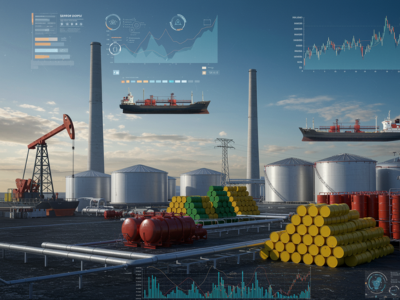
The global energy market is facing a major test of stability. According to the U.S. Energy Information Administration (EIA), crude oil prices are likely to fall in 2026 because of strong supply and growing inventories. The EIA expects a surplus of more than 2 million barrels per day, mainly due to increased production outside OPEC+ and ongoing flows of sanctioned oil. Understanding these trends helps energy leaders, investors, and policymakers prepare for price pressures and logistical challenges.
The Fundamental Imbalance: Supply Overwhelms Demand
The core challenge for 2026 is a structural oversupply. The EIA forecasts that global liquids production will continue to exceed consumption. This imbalance is creating a firm downward pressure on crude prices.
Rising Global Oil Market Inventories
Rising global oil inventories are the main sign of oversupply. The EIA expects these builds to top 2 million barrels per day in 2026, similar to the rate seen in late 2025. This ongoing growth in inventories is making storage costs a bigger focus for the market.
Price Projections for the Year
Because of the ongoing surplus, crude prices are expected to keep falling. Brent crude is forecast to average about $55 per barrel in early 2026 and stay near that level all year. WTI prices are expected to average around $51 per barrel in 2026.
Non-OPEC+ Supply: The Engine of Growth
The main reason for the supply surplus is steady growth from producers outside OPEC+. Their output keeps rising faster than demand.
U.S. Production Trends in the Global Oil Market
The U.S. will continue to be a key oil producer. The EIA expects U.S. production to average about 13.5 million barrels per day in 2026, which is about 100,000 barrels per day less than the 2025 record. Small gains in the Permian and Gulf of Mexico will be balanced by declines in other regions.
Key Global Contributors
Brazil, Guyana, and Canada, along with the U.S., will make up about 60% of global oil production growth in 2026. New offshore projects in Brazil and Guyana, which started earlier than planned, boosted growth in 2025 and will keep adding supply in 2026.
The Sanctions Effect: Trade Flows and Price Floors
Geopolitical sanctions add a lot of uncertainty to the oil market and make the balancing act even more complicated.
Disrupted But Sustained Flows
Sanctions on countries such as Russia change trade routes and make pricing more complex. Still, the EIA expects Russian oil to keep flowing, often through intermediaries and at discounted prices. This keeps overall supply high, while supply risks help support short-term crude prices.
OPEC+ Restraint as a Price Floor in the Oil Market
OPEC+ is expected to keep limiting production in 2026. The EIA predicts OPEC+ will produce about 1.3 million barrels per day less than its target, which helps keep prices from falling even further despite the surplus.
Global Demand Trends: Non-OECD Asia Leads the Way
While supply growth is the main story, demand still matters. Global liquid fuels consumption is expected to grow by 1.2 million barrels per day in 2026.
Asia’s Driving Role
Almost all of the growth in oil consumption through 2026 will come from non-OECD countries, especially in Asia, which is growing the fastest.
- China’s total liquid fuels consumption is expected to rise by 300,000 barrels per day in 2026, thanks to higher GDP growth forecasts. China’s ongoing stockpiling also boosts demand and helps absorb extra supply, which limits price drops.
- India is expected to use 170,000 more barrels of liquid fuels per day in 2026, making it a key driver of demand growth.
Logistical Pressure: The Shift to Floating Storage
The fast buildup of global oil inventories is causing logistical problems and is also affecting future price trends.
Storage Economics and Contango
As onshore storage fills up, companies have to use more expensive options like storing oil on tankers. This raises storage costs and pushes future oil prices higher than current prices, a situation known as contango.
Impact on Oil Market Price Discovery
Higher floating storage costs are partly responsible for lower crude oil prices, since these costs are factored into how prices are set. The ongoing buildup of inventories makes managing storage even more important in today’s oil market.
Actionable Guidance for Navigating the Oil Market
To handle the oil market’s challenges under sanctions, companies need to manage risks actively and make decisions based on data.
- Monitor EIA Updates: Keep a close eye on the EIA’s monthly Short-Term Energy Outlook reports to stay updated on inventory and production trends.
- Model Price Scenarios: Use the EIA’s supply and demand charts to plan for different price scenarios, including the possibility of WTI prices dropping to $50 per barrel.
- Assess Storage Costs: Be ready for changes in floating storage costs, since rising inventories make it important to manage storage challenges.
- Watch Asian Demand: Keep a close watch on demand trends in Asia, especially in China and India, as these will give the best clues about future price pressures.
- Review Sanctions Compliance: Regularly check how sanctions affect your supply chain, make sure you’re following the rules, and look for other crude sources if needed.
Policy, Pressure, and the Future of the Oil Market
The oil market in 2026 will be shaped by oversupply, with policy choices and stockpiling helping to keep things in check. The ongoing push and pull between non-OPEC+ supply and OPEC+ efforts to stabilize prices will drive the market. Companies that use reliable data and plan ahead will be better able to manage risks, take advantage of price changes, and stay resilient in a complicated energy landscape.
What Readers Want to Know: Key FAQs on the 2026 Oil Market
Q1. Will oil prices stabilize in 2026?
Brent crude is expected to average about $55 per barrel in 2026, kept low by strong production and growing inventories. OPEC+ policies and China’s stockpiling should help prevent bigger, long-term price drops.
Q2. How do sanctions influence crude pricing?
Sanctions disrupt trade and change where oil comes from, which makes prices more volatile. The EIA says these disruptions make balancing the oil market even harder, put pressure on inventories, and increase the cost of rerouting supply.
Q3. How important is non-OECD demand growth?
Non-OECD countries, especially China and India, are behind nearly all global demand growth through 2026. This helps support prices, but it’s not enough to use up the expected surplus.
Q4. What is the biggest downside risk to prices?
The main risk is that global oil inventories could get so large that storage runs out, which would push prices even lower than expected. If sanctions are eased or OPEC+ cuts end sooner than planned, prices could also drop further.