Why Green IT Is the Next Big Thing in AI and Cloud Computing
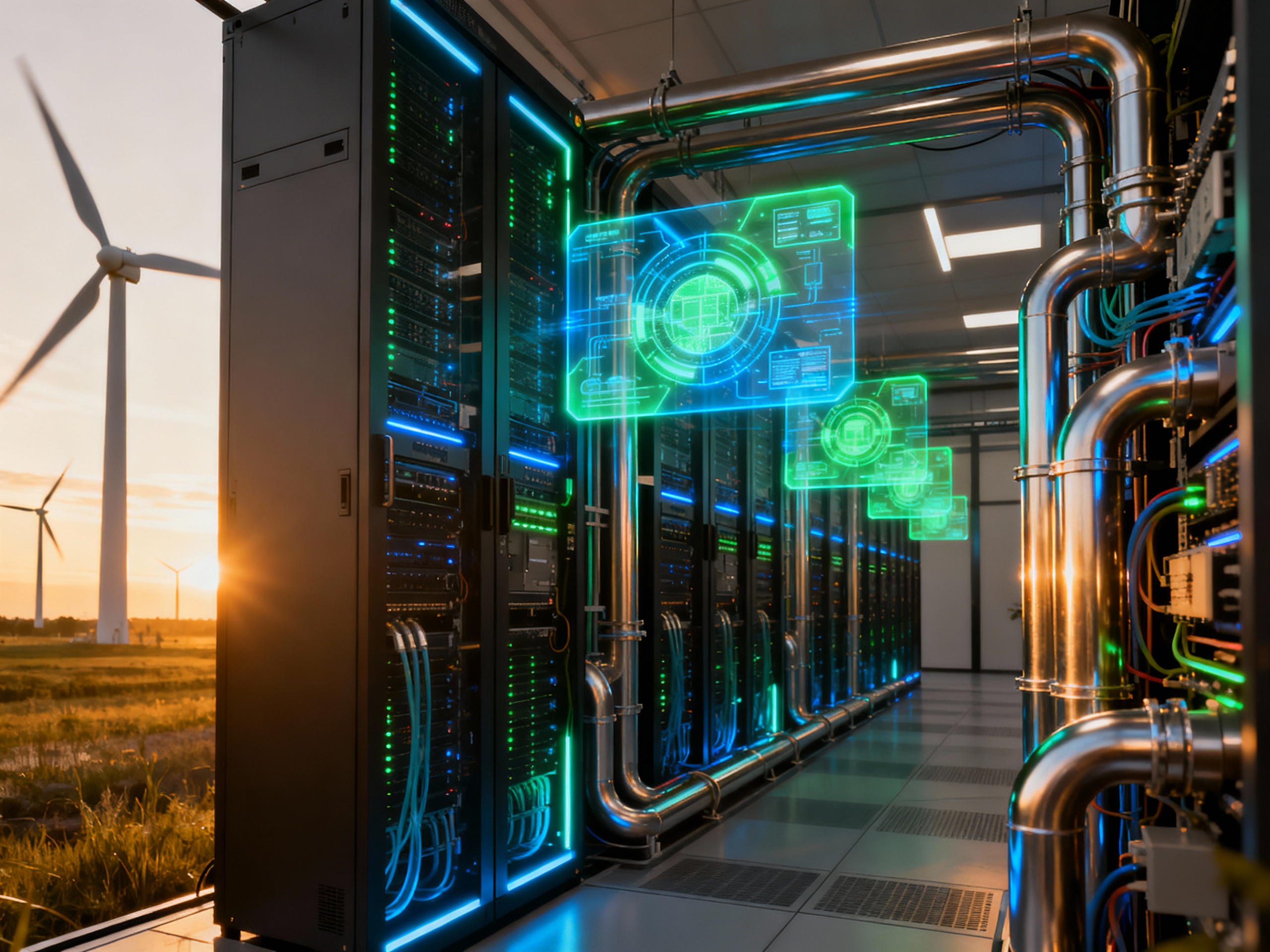
Artificial Intelligence (AI) and cloud computing drive our modern world. Yet, this high-tech progress comes at a growing cost to the planet. The surge in large language models (LLMs) consumes massive energy. This energy demand pushes data center loads to unprecedented, unsustainable levels. By 2026, AI workloads could account for 6% of all U.S. electricity use. This figure is up from 4% in 2022. The challenge is clear: Green IT & Green AI must make technology sustainable. We cannot slow down essential innovation.
Green IT & Green AI are strategic approaches. They combine energy-efficient infrastructure and carbon-aware computing. They also integrate clean energy sources directly into operations. Backed by government initiatives and financial investment, these frameworks promise to reduce environmental impact. They support AI-driven growth responsibly.
The Power of Green AI Frameworks
AI models consume enormous energy for both training and real-time inference. Addressing this requires greater transparency. The NREL’s Green Computing Catalyzer released a guide for developers. This tool helps accurately measure the energy use and carbon footprint of machine learning workloads.
- This transparency enables powerful carbon-aware scheduling.
- Tasks run during low-carbon grid periods, which cuts emissions significantly.
- It can reduce the carbon footprint of compute tasks by up to 45%.
- The DOE’s SEAB working group supports these necessary steps.
- They recommend better energy efficiency in LLM training and inference.
- These steps ensure AI innovation aligns with critical sustainability goals.
The goal is simple. We must treat carbon emissions like a cost function within the AI algorithm itself.
Clean-Energy Cloud Tools: Powering Data Centers
Data centers use more electricity than some entire nations. To combat this, the DOE advocates a diverse portfolio approach to energy. Cloud providers must adopt new infrastructure strategies.
- Renewable Integration is a primary focus for all hyperscale facilities.
- This involves using dedicated solar, wind, and hydro power sources.
- Energy storage systems are also critical for grid resilience.
- NREL runs projects like Underground Thermal Energy Storage (UTES).
- These systems store “cold” energy during off-peak hours.
- This dramatically reduces energy loads for cooling when demand is highest.
- Liquid cooling and microgrids further enhance efficiency for AI workloads.
- These innovations ensure cloud scaling remains environmentally sound.
Holistic Green Data Center Solutions: Beyond Electricity
True sustainability means thinking beyond just the source of electricity. The DOE’s FEMP guidelines emphasize comprehensive waste reduction.
- Water Reuse is now mandatory for cooling systems in new facilities.
- Circular economy practices promote IT hardware recycling and refurbishment.
- Airflow optimization and ASHRAE-compliant retrofits minimize energy waste.
- The EPA’s ENERGY STAR program certifies hardware efficiency.
- Certified servers and UPS systems are at least 30% more efficient.
- Over 190 data centers already participate in this public benchmarking program.
This holistic approach targets every aspect of a facility’s environmental footprint. It helps to move the industry toward zero-waste operations.
Digital Twins Driving Energy Optimization
Digital twins, the virtual replicas of physical systems, are transforming sustainability. They offer unprecedented insight into real-time operational efficiency. Oak Ridge National Lab reports on the massive value of this technology.
- Digital twins accurately simulate energy flows and cooling needs.
- They predict maintenance needs before catastrophic failures occur.
- They optimize workload placement to minimize overall energy use.
- Case studies confirm up to an 84% reduction in non-compute energy waste.
- This massive efficiency gain happens when digital twins guide operational decisions.
This predictive power is transforming data center management into a precise science.
Investment Trends: ESG for Green IT
Sustainability has become a powerful financial driver. MSCI’s ESG research highlights significant investor interest in Green IT. This interest is now translating into massive capital inflows.
- Clean-energy infrastructure for data centers receives heavy investment.
- Circular economy initiatives for hardware attract strong funding.
- Energy-efficient technologies tied to AI workloads are highly valued.
Companies that quickly adopt Green IT strategies earn better ESG scores. High scores attract institutional investors and meet strict compliance requirements. This financial pressure ensures that sustainability remains a business imperative.
Implementation Challenges and Best Practices
Despite strong progress, important challenges still exist. Compute demand for AI still grows faster than renewable energy capacity. Retrofitting older, aging infrastructure remains a costly project. Regulatory standards for carbon-aware computing are also still evolving globally.
Best practices guide companies through these difficulties:
- Deploy Federated Carbon Intelligence (FCI) platforms immediately.
- Use this platform for real-time, carbon-aware job scheduling.
- Pilot digital twin models for predictive energy optimization.
- Partner with utilities for renewable integration and grid stability.
- Adopt ENERGY STAR-certified hardware and zero-waste policies.
These strategies provide a practical roadmap for achieving genuine sustainability.
The Road Ahead: Green IT & Green AI in 2026+
The future of digital infrastructure is undeniably green. By 2026 and beyond, we expect major shifts in industry standards.
- Carbon accounting will become mandatory for all AI workloads.
- Multi-cloud sustainability dashboards will track energy use instantly.
- Edge computing will run primarily on renewable, local power sources.
- Digital twin-driven automation will manage predictive cooling flawlessly.
Green IT & Green AI will become non-negotiable pillars of enterprise strategy. They ensure innovation moves forward hand-in-hand with environmental responsibility. The future of technology must be clean.