SkyWater, SQC Join Forces to Accelerate Quantum Computing Era
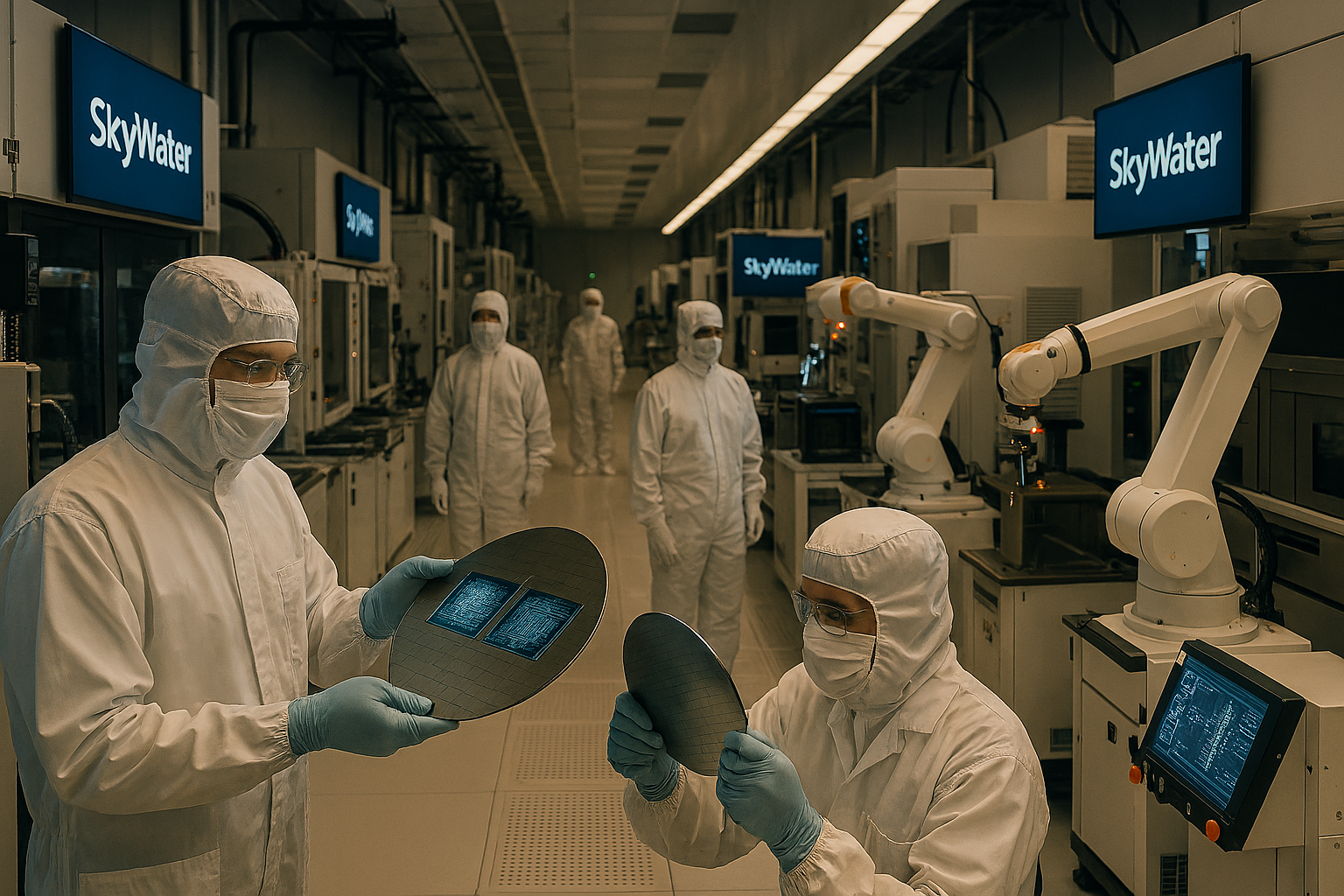
New Delhi, India, November 24, 2025 – SkyWater Technology and Silicon Quantum Computing (SQC) have announced a partnership aimed at accelerating the integration of quantum and classical computing. This move, experts say, could bring advanced hybrid processors closer to practical use while strengthening domestic technology manufacturing. By combining SkyWater’s semiconductor expertise with SQC’s quantum processor innovations, the collaboration seeks to build a seamless “future compute stack” for real-world applications.
Quantum computing promises breakthroughs in medicine, climate modeling, and cybersecurity. Yet, developing scalable, reliable quantum systems has remained difficult. By linking quantum processors with classical computing infrastructure, SkyWater and SQC hope to overcome these challenges. The goal is to produce systems capable of handling complex problems faster and more efficiently than conventional computers.
Thomas Sonderman, CEO of SkyWater Technology, highlighted the importance of the partnership. “We are helping bring the future compute stack closer to reality by combining SQC’s precision engineering with our U.S.-based manufacturing model,” he said. Sonderman emphasized that this initiative aligns with SkyWater’s mission to support innovation while keeping production secure and domestic.
Michelle Simmons, Founder and CEO of SQC, shared a similar view. She noted that the collaboration reflects a shared commitment to advancing fault-tolerant, commercial-scale quantum computing. “Working with SkyWater ensures we can integrate our atomically engineered quantum processors into a robust, secure supply chain,” Simmons said. She added that the partnership provides a strong foundation for scaling quantum technologies safely.
The collaboration will focus on hybrid systems that combine SQC’s quantum processing units (QPUs) with SkyWater’s silicon wafers and superconducting resonators. Production and assembly will occur in SkyWater’s U.S. facilities. This setup will meet national security standards and reduce reliance on overseas suppliers, a key concern for technology sovereignty.
Analysts view the partnership as a strategic step for the U.S. in the global quantum race. Countries in Europe and Asia are investing heavily in quantum technologies, and domestic alliances like this one could ensure the United States remains competitive. By bringing together specialized quantum expertise and established semiconductor manufacturing, the two companies aim to accelerate innovation while enabling commercial-scale deployment.
Hybrid quantum-classical systems could have widespread industry applications. In finance, banks might optimize portfolios instantly. In healthcare and pharmaceuticals, researchers could simulate molecular interactions faster, speeding drug development. Manufacturing, logistics, and energy sectors may also benefit as hybrid processors enhance complex simulations and decision-making.
The move represents a growing trend of collaboration between emerging quantum companies and established technology manufacturers. Combining specialized knowledge with production capabilities ensures breakthroughs can move from laboratories to the marketplace more efficiently. Industry observers say such partnerships will be critical in transforming quantum innovations into practical solutions.
While fully operational hybrid systems may still be a few years away, early prototypes are expected soon. Both SkyWater and SQC remain optimistic about the timeline. The companies plan to test and refine systems in controlled environments before broader adoption in enterprises and government agencies. This approach will ensure high performance while maintaining reliability and security.
The partnership also reinforces the importance of secure domestic supply chains. By producing key components in U.S. facilities, the companies reduce dependence on foreign suppliers. This not only strengthens national security but also ensures that quantum computing development remains under domestic control, a factor increasingly important to both policymakers and industry leaders.
As quantum computing steadily approaches mainstream use, collaborations like SkyWater and SQC’s are likely to define the next phase of technological progress. By integrating cutting-edge quantum processors with reliable classical systems, the partnership paves the way for faster, smarter, and more secure computing solutions. Experts say this could mark a turning point for industries, governments, and research institutions alike.
Innovation, collaboration, and security are at the heart of this effort. By combining their strengths, SkyWater and SQC aim to make hybrid quantum-classical computing a practical reality sooner than expected. For businesses and consumers, this development could open new possibilities in computing, research, and problem-solving, signaling a new era in the technology landscape.