Data Center Chip Demand Fuels AMD’s Bold Profit Goals
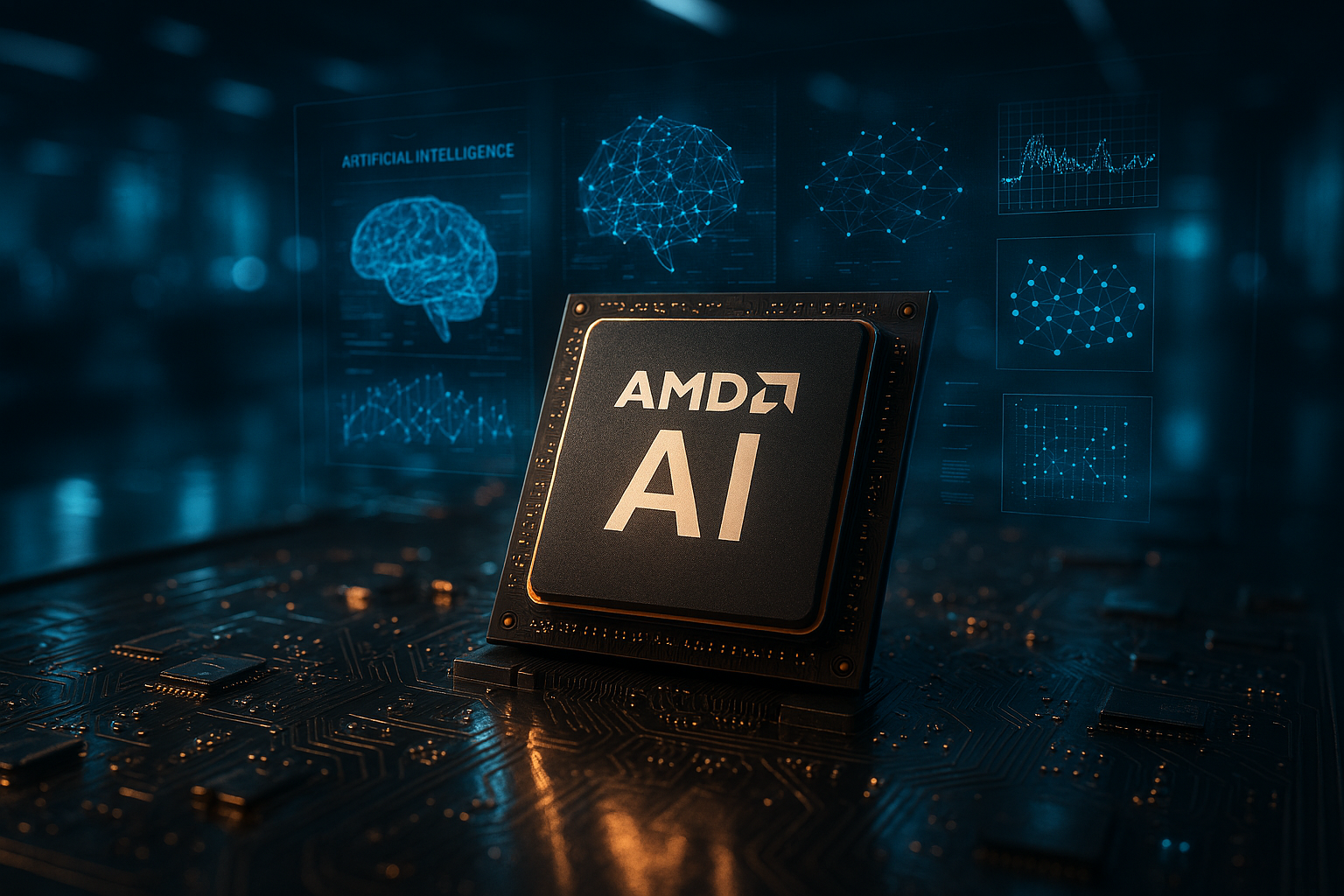
New Delhi, India, November 12- Advanced Micro Devices (AMD) is setting ambitious targets for the next decade, projecting that its profits could triple by 2030 amid a surge in demand for data center chips. At its annual analyst day in New York, the semiconductor giant outlined plans to tap into a booming market that it believes could reach $1 trillion in the coming years.
The company expects annual revenue from data center chips alone to hit $100 billion within five years, signaling a potential shift in the semiconductor landscape. CEO Lisa Su described the opportunity as “exciting,” highlighting AMD’s strong position to capture a significant slice of the growing market. Much of this expansion, she said, will be driven by artificial intelligence (AI), spanning processors, networking chips, and specialized AI hardware.
“We see AI as a transformative force for our industry,” Su said. “It’s powering new demand across data centers globally, and AMD is ready to lead with high-performance solutions.”
The announcement came after a strong performance in the stock market. AMD shares rose 4% in after-hours trading following the news, reversing earlier losses. Since early October, the stock rose 16%, boosted by a multiyear OpenAI deal potentially generating billions annually. While Nvidia remains the dominant force in AI chips, the deal reflects growing confidence in AMD’s technology.
Chief Financial Officer Jean Hu outlined aggressive growth expectations. The company forecasts 35% annual growth overall and 60% in its data center segment over the next three to five years. Earnings per share are projected to climb to $20 by 2030, compared to current estimates of $2.68 for 2025. These figures underscore AMD’s confidence in scaling its operations rapidly to meet rising demand.
Looking ahead, AMD is preparing a new wave of AI-focused products. In 2026, the company will release MI400 AI chips for scientific computing and generative AI applications. AMD will also launch a full server rack, like Nvidia’s GB200 NVL72, for high-performance computing and AI infrastructure.
Su also highlighted recent acquisitions as part of AMD’s broader strategy to build a robust AI ecosystem. The company has acquired server manufacturer ZT Systems and several software firms, including MK1 earlier this week. “We’ve built an M&A machine,” Su said, signaling that more acquisitions are likely. Chief Strategy Officer Mat Hein added that AMD will continue to pursue AI software tuck-ins to strengthen its competitive position.
In the short term, AMD’s outlook remains strong. The company expects strong AI chip and data center CPU demand to push fourth-quarter revenue above Wall Street estimates. Analysts say the surge in AI-related spending has reinforced investor confidence in AMD’s long-term strategy.
Industry observers note that AI is fundamentally reshaping the semiconductor landscape. Nvidia CEO Jensen Huang projected the global AI infrastructure market could hit $3–$4 trillion by 2030, showing huge chipmaker opportunities. AMD’s projections align with this trend, positioning the company as a formidable competitor in the race to dominate AI-driven computing.
For AMD, the data center market is more than a growth opportunity it represents a broader transformation in technology. Data centers are increasingly becoming the backbone of digital infrastructure, and AI is accelerating that shift. AMD is betting it can turn ambitious plans into results by targeting a trillion-dollar market with a clear innovation roadmap.
Investors and industry watchers are paying close attention. With aggressive growth targets, strategic acquisitions, and a focus on AI-powered solutions, AMD is aiming not just to compete but to reshape the semiconductor landscape over the next decade.