Union-Busting Accusations Emerge Against GTA VI Developer
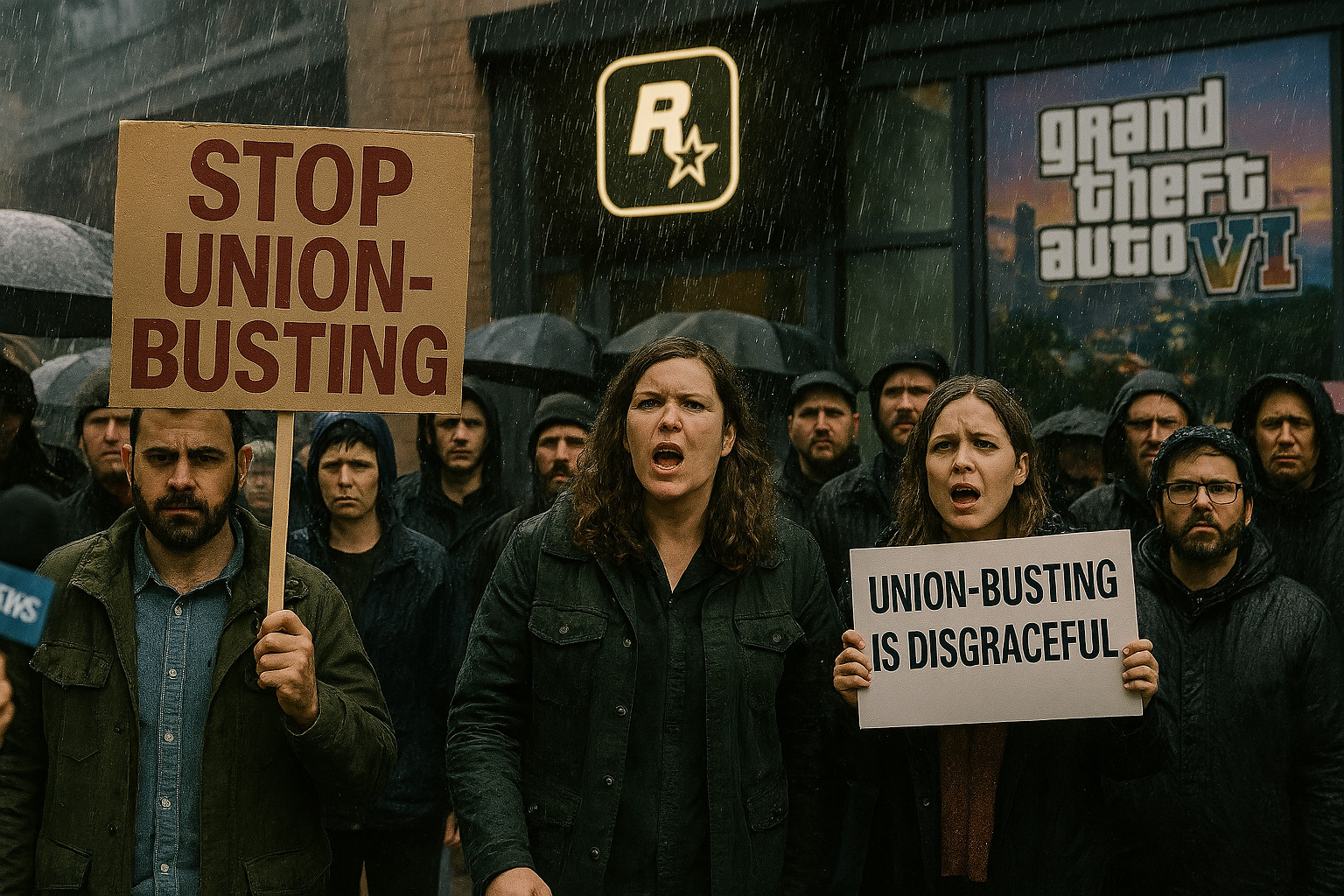
Rockstar Games, the studio behind Grand Theft Auto, faces growing backlash over alleged union-busting practices. More than thirty employees in the United Kingdom and Canada were dismissed, sparking outrage across the gaming industry. Labour organisations and online communities quickly responded, accusing the company of targeting union supporters. The Independent Workers’ Union of Great Britain (IWGB) claims Rockstar fired workers involved in union organising efforts.
According to the union, many of the dismissed employees either held union membership or were helping form one. Therefore, IWGB argues that the terminations were not coincidental but strategic and aimed at suppressing collective action. They describe the dismissals as a textbook case of union-busting, designed to prevent formal union recognition. Rockstar Games denies these allegations and insists the firings were due to gross misconduct.
The company claims the employees violated internal policies by sharing confidential information in a public forum. However, IWGB disputes this explanation and says the discussions occurred in a private Discord server. The union maintains that the server was used exclusively for union-related conversations. Moreover, they point out that the timing of the terminations aligned with efforts to meet union membership thresholds.
Consequently, they believe Rockstar acted preemptively to block union certification. This dispute comes at a critical time for Rockstar, as Grand Theft Auto VI nears release. Industry analysts expect the game to break sales records and dominate global charts. However, the controversy threatens to disrupt development and damage employee morale. Labour advocates argue that Rockstar prioritised deadlines over workers’ rights, reinforcing claims of union-busting.
Protests erupted outside Rockstar’s offices in London and Edinburgh. Supporters held signs demanding accountability and the reinstatement of terminated employees. Many demonstrators accused the company of suppressing union activity through intimidation and retaliation. IWGB president Alex Marshall condemned the firings and called them a direct attack on the worker organisation.
He stated, “Rockstar fears a union more than it values employee rights.” Meanwhile, Rockstar continues to deny any anti-union intent. The company says it supports lawful unionisation and aims to maintain a respectful workplace. However, it has not provided detailed evidence regarding the alleged information leaks—this lack of transparency fuels further suspicion and criticism. Additionally, the dismissals have serious consequences for affected workers.
Some employees held visa-sponsored roles or were undergoing medical treatment. Losing their jobs jeopardises their income, healthcare access, and immigration status. IWGB claims Rockstar deliberately targeted vulnerable workers to discourage union efforts. This tactic, they argue, exemplifies Union Busting in its most harmful form. Observers say this case could reshape labour relations in the gaming industry. If the union proves its claims, it may strengthen protections for creative professionals.
Conversely, a Rockstar victory could discourage future organising and embolden other studios.
Thus, the debate over union-busting now dominates industry conversations. Legal experts expect a prolonged battle involving employment tribunals and public campaigns. IWGB has pledged to pursue every legal avenue to reinstate the dismissed workers. They also seek compensation and formal recognition of the union.
Meanwhile, Rockstar continues development on Grand Theft Auto VI without the terminated staff.
This decision raises questions about the studio’s long-term commitment to fair labour practices. Furthermore, the controversy highlights broader tensions between corporate control and employee rights. Gaming studios often rely on secrecy and tight deadlines, which can conflict with union efforts. Balancing these priorities remains a challenge across the creative sector. The Rockstar case brings these issues into sharp focus.
As scrutiny intensifies, stakeholders await legal rulings and negotiations. These outcomes could either reinforce workers’ rights or legitimise aggressive anti-union tactics. Ultimately, the situation underscores the growing importance of transparency and fair treatment in game development. Union Busting remains a central issue in this ongoing dispute.
Public opinion continues to shift, with many calling for stronger protections for creative workers. The Rockstar controversy may serve as a turning point for labour organising in tech and entertainment. As the case unfolds, its impact will likely extend far beyond one studio or one game. Union-busting is no longer a hidden practice; it is now a focal point in global labour discussions.