Underwater Camera Vision: Lessons from the Deep Blue World
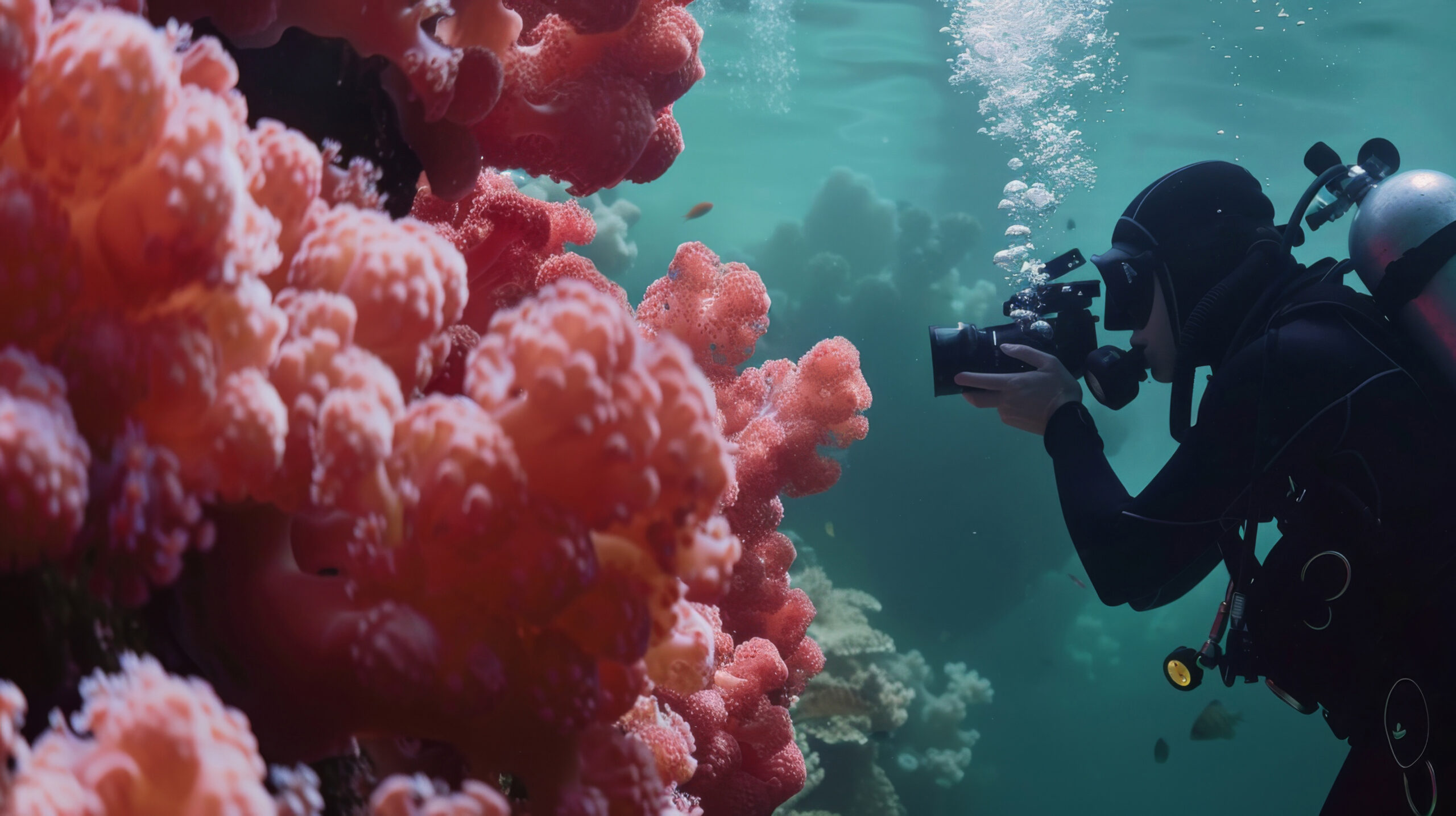
The ocean has always been a mystery. For centuries, humans looked at its surface and wondered what hid below. Today, however, technology allows us to dive deeper, not just physically, but visually. The Underwater Camera has become our eye beneath the waves, revealing worlds both alien and familiar. From vibrant coral gardens to silent shipwrecks, every frame it captures reminds us how little we truly know.
This is not just about pretty pictures. It is about perspective. It is about what happens when we finally see the unseen, and how those images reshape our understanding of the planet we call home.
A Lens Between Two Worlds
The ocean covers more than 70% of the Earth, yet less than 20% of its seafloor is mapped in detail. That imbalance used to make sense, until cameras began to dive. The Underwater Camera is the bridge between two worlds: the bright, oxygen-rich surface and the mysterious depths below.
Early underwater imaging was crude. Grainy footage and bulky housings made it a niche pursuit. But as technology evolved, these cameras shrank, sharpened, and smartened. Today, 4K video, AI-driven stabilization, and advanced optics have turned them into tools of both art and science.
So, what exactly does the ocean see through these lenses? It sees humanity’s curiosity and its contradictions.
From Discovery to Documentation
Every dive with an Underwater Camera adds another layer to our collective memory of Earth. In the past, we relied on descriptions from divers or sketches by explorers. Now, high-definition images reveal ecosystems in exquisite detail.
Marine biologists use underwater imaging to track coral bleaching, monitor fish populations, and document species we never knew existed. Photographers, on the other hand, chase beauty, the dance of light on scales, the sway of seaweed in the current.
Yet, these two pursuits often overlap. A single photograph can stir emotion and data at once. It can serve science while moving the soul. That is the quiet power of the Underwater Camera; it transforms observation into empathy.
Seeing the Invisible
The ocean hides wonders that thrive without sunlight. Hydrothermal vents, bioluminescent creatures, and deep-sea corals challenge our definition of life. Before, these mysteries were locked in darkness. Now, cameras with low-light sensors and high-pressure housings reveal their glow.
Through these images, we witness resilience. We see how life adapts to extremes. We also notice how fragile these systems are. Temperature shifts, plastic pollution, and noise intrusion all appear vividly when viewed through the underwater lens.
An Underwater Camera doesn’t just show beauty; it exposes truth.
A Mirror to Ourselves
Every photo taken underwater is a reflection of us. It reveals not only marine life but also our impact. Floating plastic, oil residues, and coral decay tell silent stories of neglect. Yet, there is hope in visibility. Once we see, we cannot unsee. Awareness breeds responsibility. Underwater imagery has become a tool for conservation campaigns and educational outreach. Organizations like National Geographic and OceanX rely on these visuals to drive environmental change.
When an Underwater Camera captures a turtle tangled in a fishing net, the image does more than document; it demands action. It turns guilt into motivation and science into storytelling.
Technology That Goes the Distance
The technology behind the Underwater Camera is just as fascinating as the images it produces. Manufacturers race to build cameras that endure saltwater, pressure, and low light without losing clarity. Recent advances include AI-driven scene recognition, adaptive lenses, and real-time color correction. Many cameras now sync with drones, allowing hybrid surface-and-depth shots that blur traditional boundaries.
Compact action cameras, like GoPros, have democratized underwater photography. What once required a team of professionals now fits in a diver’s palm. Meanwhile, industrial and research-grade cameras explore trenches thousands of meters deep.
These innovations do more than improve photography; they expand our visual vocabulary. They teach us to think in gradients, not absolutes.
Economic Ripples Beneath the Surface
The Underwater Camera market has seen strong growth over the last decade. According to industry data, global sales continue to rise due to tourism, marine research, and social media. Divers, vloggers, and environmentalists all contribute to this surge.
As adventure travel recovers post-pandemic, underwater photography grows more popular. Coastal destinations now offer workshops, rental packages, and guided photo dives. Even smartphone manufacturers invest in waterproof casings and underwater modes. This wave of interest has created a new economic ecosystem, one that blends technology, travel, and storytelling. The Underwater Camera has moved from niche gear to mainstream desire.
Social Media and the Submerged Aesthetic
Let’s face it: Instagram loves the ocean. The turquoise blues, the shimmer of sunlight through water, it’s visual gold. Content creators use underwater shots to stand out in crowded feeds. As a result, the Underwater Camera has become a creative badge of honor.
But this trend has deeper implications. When influencers share coral reefs and marine life, they spread awareness far beyond scientific circles. A viral video of a whale shark can inspire millions. A time-lapse of coral regrowth can restore hope. Thus, the lens beneath the surface doesn’t just capture images, it connects communities.
Science in Motion
Beyond art and aesthetics, underwater imaging drives serious research. Marine scientists use high-resolution cameras to analyze everything from plankton migration to seabed topography. Autonomous underwater vehicles (AUVs) now carry advanced cameras that map the ocean floor with millimeter precision. Combined with machine learning, these systems can identify species, count populations, and even detect microplastic presence.
The Underwater Camera has turned science into cinema, and data into discovery.
Challenges Beneath the Waves
Despite the progress, the ocean remains an unforgiving environment. Water distorts color, reduces light, and increases pressure with depth. Even the most advanced Underwater Camera struggles to maintain true-to-life hues and focus in low-visibility conditions. Battery life is another hurdle, extreme temperatures, and pressure rain energy fast. Maintenance and cleaning are essential, as saltwater corrosion can destroy equipment within weeks.
Still, these challenges inspire innovation. Engineers continue to develop adaptive lenses, pressure-resistant housings, and longer-lasting batteries. Each improvement takes us closer to capturing the ocean as it truly is.
From Curiosity to Care
Something profound happens when people view underwater imagery. They start caring. Whether it’s a diver’s vlog or a scientist’s report, visuals build bridges between emotion and intellect. When we look through an Underwater Camera, we see a shared home. We realize that the ocean’s fate is tied to ours. The camera becomes both witness and warning.
This emotional link has fueled conservation movements and inspired new generations of ocean advocates. Schools now use underwater footage in classrooms to teach ecology and climate literacy. What was once hidden now educates millions.
A Future of Clarity
As imaging continues to advance, the line between exploration and expression will blur further. Next-generation Underwater Cameras will likely use AI for real-time analysis, predicting species behavior, or identifying threats. Virtual reality will soon allow people to “dive” digitally, experiencing coral reefs without leaving home. Such accessibility can turn passive interest into active involvement.
The ocean’s story is still unfolding, and the lens beneath the surface is its narrator.
Conclusion: Lessons from Below
In the end, the Underwater Camera teaches us three lessons. First, that curiosity leads to connection. Second, that seeing is the first step toward saving. And third, that our planet’s beauty lies not just in what’s visible, but in what waits beneath.
The ocean doesn’t just reflect light; it reflects life. Through every image captured below, we are reminded of our responsibility above. As we continue to look deeper, may we also learn to protect what we see. Because sometimes, the clearest view of Earth comes from beneath the surface.