Nuclear Submarine Technology Acquisition of Russia Secret Insider
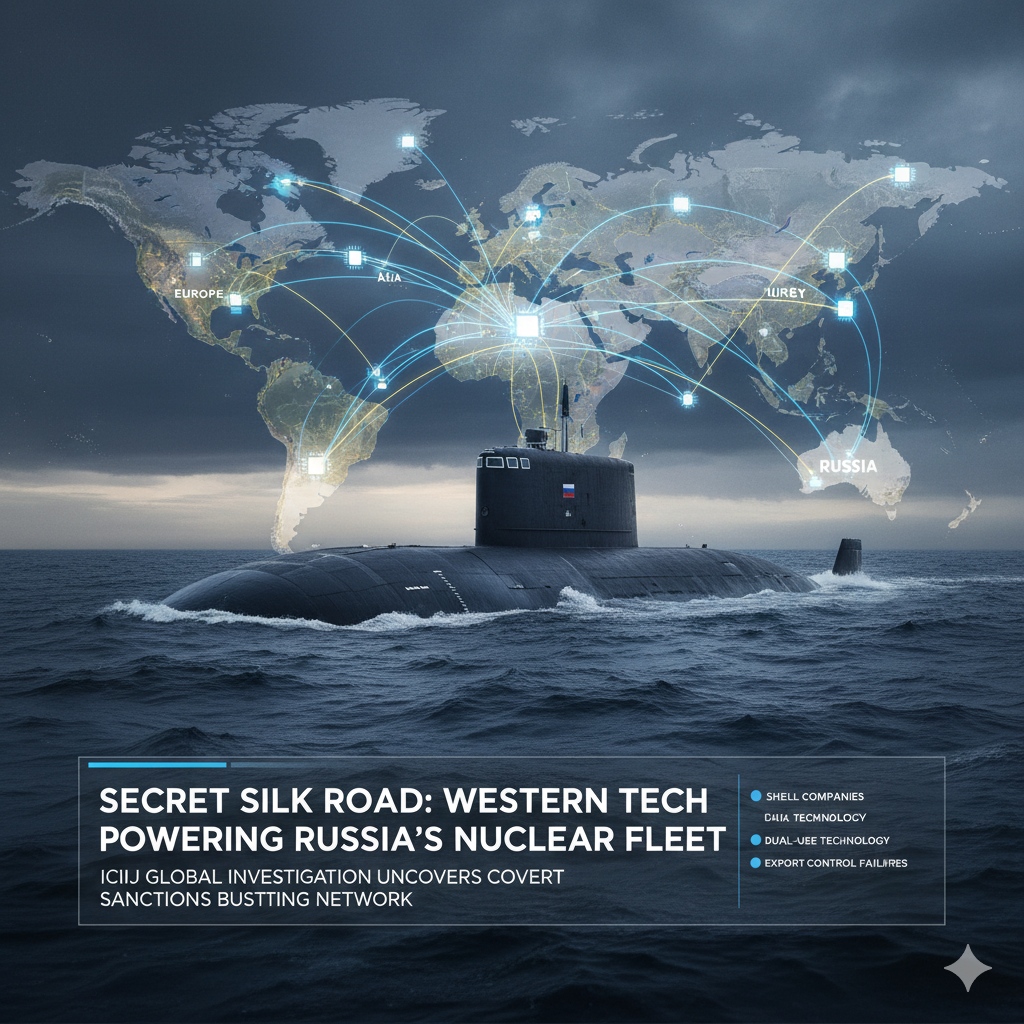
A recent investigation revealed that Russia secretly obtained Western technology to upgrade its nuclear submarine fleet. The International Consortium of Investigative Journalists (ICIJ) led the research, uncovering a covert network bypassing sanctions. According to the report, Russia acquired critical components that helped its nuclear submarine systems remain operational despite restrictions. Experts warn that these activities may compromise global security and expose weaknesses in export control frameworks.
Investigators followed financial records, shipping manifests, and corporate transactions involving shell companies. These organizations appeared legitimate but hid their true intentions. They acquired advanced navigation chips, sensors, and cooling systems necessary for nuclear submarine operations. Though labeled as civilian-use items, authorities later found them redirected to Russian defense industries. This case demonstrates how dual-use technology can be exploited for military purposes.
Western suppliers claimed ignorance regarding misuse. Many said they complied with all licensing requirements. However, intermediaries masked end-user identities, creating complex supply chains. As a result, Russia obtained critical components without raising suspicion. This finding underscores the persistent challenge governments face when monitoring dual-use technology transfers.
The nuclear submarine fleet represents a cornerstone of Russia’s strategic deterrent. These vessels provide stealth, mobility, and second-strike capability, ensuring national security. Maintaining them requires high-precision materials and electronics. After sanctions restricted access to Western technology in 2014, Russia struggled to replace certain systems. Nonetheless, the investigation confirms that the nation successfully secured essential technology through covert operations.
ICIJ reporters examined customs records, shipping logs, and leaked correspondence from multiple jurisdictions. They found that intermediaries in Hong Kong, Turkey, and the UAE facilitated the procurement. These companies purchased electronics from Western suppliers while declaring them for harmless industrial purposes. Subsequently, the components reached Russia, supporting nuclear submarine maintenance and upgrades.
International security analysts argue that these operations undermine non-proliferation goals. Russia gains a strategic advantage by acquiring restricted technology, which may shift maritime security dynamics. Export control authorities rely on documentation, yet falsified paperwork often hides illicit transactions. Enforcement mechanisms must evolve to prevent similar circumventions.
Western governments are considering stricter oversight measures. Some policymakers propose a unified tracking system for high-risk exports. Others advocate increased monitoring of intermediaries handling sensitive technology. Their objective is to prevent further breaches while enabling legitimate trade. Meanwhile, Russian officials have remained silent regarding the nuclear submarine fleet and related acquisitions.
Economic pressures drive covert procurement efforts. Russia’s defense industry depends on specialized components that domestic production cannot fully supply. Intermediaries exploit gaps to fulfill ongoing demand. This pattern highlights vulnerabilities in global supply chains that inadvertently support military projects.
The report also raises ethical questions for Western technology manufacturers. Companies must balance profit with compliance and national security responsibilities. Some have pledged enhanced vetting processes, while others cite limited resources for tracking downstream transactions. Experts emphasize that improved transparency is crucial to prevent misuse.
The nuclear submarine in this context symbolizes more than military hardware. It represents technological dependence that shapes modern defense strategies. Commercial trade can inadvertently empower military programs, making it vital to safeguard sensitive technology. International cooperation is key to closing enforcement gaps and protecting strategic stability.
Investigators revealed a sophisticated web of deception operating under legitimate trade. Each transaction, though seemingly routine, strengthened Russia’s nuclear submarine capabilities. Authorities have not reported an immediate threat, yet the implications remain serious. Analysts warn that similar methods may persist unless systemic reforms take place. Controlling technology flow remains as critical as developing it.