Microsoft’s AI Upgrade Faces Competition Pressure
New Delhi, India, October 17, 2025- Microsoft has announced a significant upgrade to Copilot in Windows 11, introducing a suite of advanced features aimed at deepening artificial intelligence integration across its platform. The update, unveiled on Thursday, reflects Microsoft’s strategic direction to position Copilot as a core component of the Windows experience, further aligning its AI roadmap with evolving user needs and competitive market dynamics.
A key highlight of the release is hands-free voice activation, allowing users to initiate the assistant by simply saying, “Hey Copilot.” This enhancement significantly improves accessibility, particularly for users engaged in multitasking or those with mobility challenges. The voice activation feature is opt-in, giving users full control over its activation and use, in line with Microsoft’s emphasis on user autonomy and security.
Microsoft has also announced the global rollout of Copilot Vision, expanding access to a feature previously limited to select markets. Copilot Vision enables the assistant to understand and analyze on-screen content, including documents, images, and websites, and respond to user queries in real time. This tool enhances contextual support, allowing users to obtain relevant information based on what they are viewing.
Looking ahead, Microsoft plans to extend the functionality of Copilot Vision by incorporating text-based interaction, in addition to voice. This update is currently being tested within the Windows Insider Program and is expected to broaden user engagement by accommodating varied communication preferences.
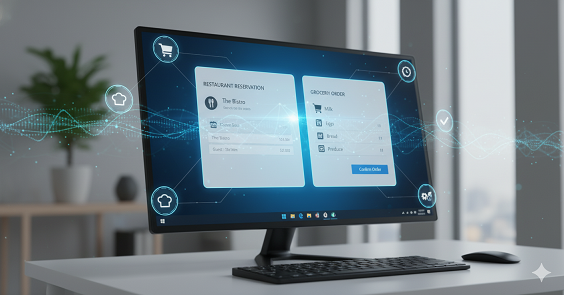
Further strengthening Copilot’s practical utility, Microsoft has introduced Copilot Actions, an experimental capability that empowers the assistant to perform real-world tasks directly from the desktop interface. Users can delegate tasks such as booking a restaurant reservation or ordering groceries online, with the assistant executing these actions only after receiving explicit user consent. Data access remains limited and permission-based, reinforcing Microsoft’s privacy-centric AI strategy.
In a move to extend its AI functionality beyond productivity, Microsoft has launched Gaming Copilot, now integrated into Xbox Ally consoles. This gaming-focused version delivers real-time support, strategy tips, and in-game recommendations, providing value for both casual players and competitive gamers. The company sees this as a critical step in diversifying Copilot’s application across entertainment verticals.
The latest updates align with Microsoft’s overarching vision of transforming artificial intelligence from a standalone feature into an embedded layer of user interaction across Windows. By tightly integrating Copilot into the operating system, Microsoft aims to enhance user productivity without disrupting existing workflows.
Yusuf Mehdi, Corporate Vice President and Chief Marketing Officer for Microsoft’s Consumer Division, reinforced this direction during the announcement. “We believe we’re entering the next phase of AI adoption, where it shifts from being an isolated tool to becoming an essential, intuitive part of everyday digital tasks,” said Mehdi. “Our goal is to make AI a natural extension of how users already work, create, and communicate.”
The enhancements also reflect Microsoft’s deliberate and responsible approach to AI implementation. By offering features on an opt-in basis, limiting access to user data, and leveraging feedback loops through programs like Windows Insider, Microsoft maintains a strong focus on transparency, trust, and user empowerment.
As competitors such as Google and Meta continue to embed AI across mobile and web platforms, Microsoft’s focus on natively integrating AI into the desktop environment positions it strategically within the broader technology landscape. These developments mark a notable shift in how users will interact with computing systems, evolving from traditional input-output models to collaborative, intelligent user experiences.
With the Copilot updates now live, Windows 11 users can expect a more intuitive, efficient, and responsive operating environment, tailored to modern demands across work, life, and play. Microsoft’s AI-first strategy not only enhances the core Windows platform but also sets a new industry standard for integrated digital assistants.