AI Gets a Boost as Pharma Firms Share Research Data
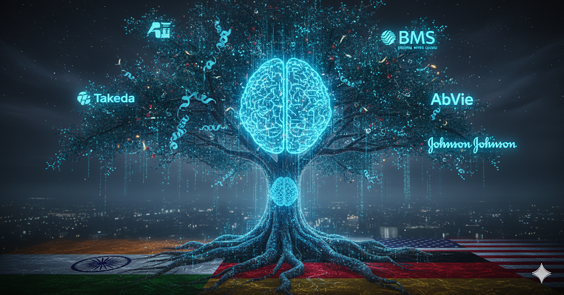
New Delhi, India, October 1, 2025-AI drug discovery is gaining momentum as Bristol Myers Squibb and Takeda Pharmaceuticals announce a new partnership aimed at transforming how medicines are developed. The two companies are joining forces with other pharmaceutical leaders to train a sophisticated artificial intelligence model that could reshape the future of drug research.
The initiative centers around OpenFold3, an AI model designed to predict interactions between proteins and small molecules. These predictions are vital for identifying potential drug candidates. Alongside Bristol Myers and Takeda, Astex Pharmaceuticals is also contributing proprietary data to support the model’s development.
This collaboration is part of a larger consortium that includes AbbVie, Johnson & Johnson, and Columbia University’s AlQuraishi Lab. The effort is coordinated by Apheris, a German life sciences company that provides the secure data-sharing infrastructure needed for the project.
Rather than transferring sensitive data between organizations, the consortium is using a federated data-sharing model. This approach allows each company to retain control of its proprietary information while still contributing to the AI training process. Apheris’ platform enables this by connecting datasets without moving them, ensuring privacy and compliance.
The data being shared includes thousands of experimentally determined protein–small molecule structures. These structures are essential for understanding how drugs interact with biological systems. By pooling this information, the consortium aims to improve OpenFold3’s accuracy and make it a more effective tool for drug discovery.
“This collaboration allows us to build predictive models that no single company could develop on its own,” said Payal Sheth, Vice President of Discovery Biotherapeutics at Bristol Myers Squibb. “It’s a powerful example of how working together can lead to faster innovation and better outcomes for patients.”
Hans Bitter, Head of Computational Sciences at Takeda, emphasized the strategic importance of the project. “This initiative aligns perfectly with our goal of integrating AI across all aspects of our work. It also shows how pharma companies can collaborate to achieve more than we could individually.”
OpenFold3 is the flagship project of the AI Structural Biology Network. This network brings together industry experts and academic researchers to solve complex biological problems using artificial intelligence. The collaboration with Columbia University’s AlQuraishi Lab adds scientific depth and credibility to the initiative.
The use of AI in drug development is becoming increasingly common. Traditional methods are time-consuming and expensive, often taking years and billions of dollars to bring a single drug to market. AI models like OpenFold3 can analyze vast amounts of biological data quickly, helping researchers identify promising compounds in a fraction of the time.
This partnership also reflects a broader shift in the pharmaceutical industry toward open collaboration. Companies are recognizing the value of sharing data and resources to tackle major challenges. By working together, they can accelerate innovation and deliver better treatments to patients.
The federated data-sharing model used in this project is particularly noteworthy. It allows companies to collaborate without compromising data security, which has long been a barrier to joint research efforts. This model could serve as a blueprint for future collaborations in the healthcare sector.
If successful, OpenFold3 could lead to faster breakthroughs in medicine, more personalized treatments, and a more efficient drug development process. It may also pave the way for additional partnerships that use AI to address other pressing healthcare challenges.
As artificial intelligence continues to evolve, projects like OpenFold3 demonstrate the potential of combining cutting-edge technology with industry-wide cooperation. Bristol Myers, Takeda, and their partners are setting a new standard for how innovation can be achieved in pharmaceutical research.
This collaboration marks a significant milestone in AI drug discovery. It highlights the importance of trust, transparency, and teamwork in driving progress. With OpenFold3, the pharmaceutical industry is taking a bold step toward a smarter, faster, and more collaborative future.