Autonomous Vehicles: The Future of Safe and Smart Transportation
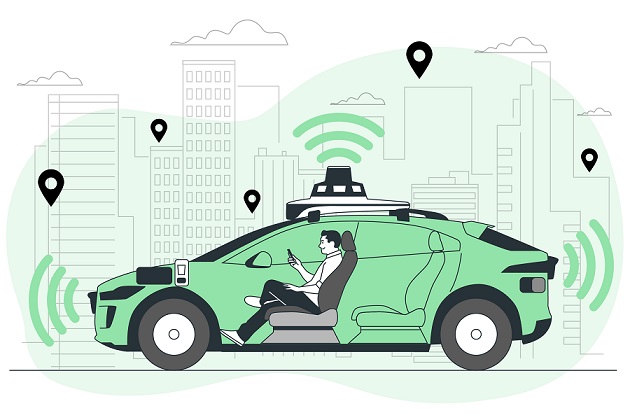
Imagine commuting to work without ever touching the steering wheel. Your car navigates traffic, stops at red lights, and merges into highways—all while you sip your coffee, read the news, or prepare for your morning meeting. What once felt like science fiction now drives steadily toward reality. Autonomous vehicles (AVs) are no longer futuristic dreams; they’ve entered the fast lane of technological innovation, aiming to revolutionize how we move from point A to point B.
What Are Autonomous Vehicles?
An autonomous car is a vehicle capable of sensing its environment and operating without human involvement. The vehicle operates without requiring a human passenger to take control at any time or to be present in the vehicle at all. An autonomous car can go anywhere a traditional car goes and do everything that an experienced human driver does.
The Society of Automotive Engineers (SAE) currently defines 6 levels of driving automation ranging from Level 0 (fully manual) to Level 5 (fully autonomous). These levels have been adopted by the U.S. Department of Transportation.
- Level 0: No Automation
Manual control. The human performs all driving tasks.
- Level 1: Driver Assistance
The vehicle features a single automated system.
- Level 2: Partial Automation
ADAS. The vehicle can perform steering and acceleration. The human still monitors all tasks and can take control at any time.
- Level 3: Conditional Automation
Environmental detection capabilities. The vehicle can perform most driving tasks, but human override is still required.
- Level 4: High Automation
The vehicle performs all driving tasks under specific circumstances. Geofencing is required. Human override is still an option.
- Level 5: Full Automation
The vehicle performs all driving tasks under all conditions. Zero human attention or interaction is required.
Autonomous vs. Automated vs. Self-Driving: What’s the Difference?
The SAE uses the term automated instead of autonomous. One reason is that the word autonomy has implications beyond the electromechanical. A fully autonomous car would be self-aware and capable of making its own choices. For example, you say “drive me to work,” but the car decides to take you to the beach instead. A fully automated car, however, would follow orders and then drive itself.
The term self-driving is often used interchangeably with autonomous. However, it’s a slightly different thing. A self-driving car can drive itself in some or even all situations, but a human passenger must always be present and ready to take control. Self-driving cars would fall under Level 3 (conditional driving automation) or Level 4 (high driving automation). They are subject to geofencing, unlike a fully autonomous Level 5 car that could go anywhere.
How Do Autonomous Cars Work?
Autonomous cars rely on sensors, actuators, complex algorithms, machine learning systems, and powerful processors to execute software.
Autonomous cars create and maintain a map of their surroundings based on a variety of sensors situated in different parts of the vehicle. Radar sensors monitor the position of nearby vehicles. Video cameras detect traffic lights, read road signs, track other vehicles, and look for pedestrians. Lidar (light detection and ranging) sensors bounce pulses of light off the car’s surroundings to measure distances, detect road edges, and identify lane markings. Ultrasonic sensors in the wheels detect curbs and other vehicles when parking.
Sophisticated software then processes all this sensory input, plots a path, and sends instructions to the car’s actuators, which control acceleration, braking, and steering. Hard-coded rules, obstacle avoidance algorithms, predictive modeling, and object recognition help the software follow traffic rules and navigate obstacles.
What are the Challenges with Autonomous Cars?
The notion of widely available fully autonomous cars relieving travelers from any of the duties and stresses of driving remains fraught with challenges that range from cost to safety concerns. No matter how well any of the technology works, none of it so far emulates human thought, logic, or instincts to make split-second decisions.
However, taking the human element out of the equation also eliminates distractions or emotions from affecting the vehicle’s operation. For that reason, fully self-driving cars are viewed as potentially safer since the technology is designed to operate the vehicle safely and logically by detecting and reacting to traffic conditions and the route it’s programmed to follow.
That brings up a question of ethics. Since self-driving cars are basically robots programmed to react a certain way in a given situation, they cannot make an ethical decision, for instance, to avoid a collision.
Real-World Examples and Progress
Several companies lead the charge in developing and deploying autonomous vehicles.
- Waymo, a subsidiary of Alphabet (Google’s parent company), operates a fully autonomous taxi service in Phoenix, Arizona. Their cars have logged millions of autonomous miles.
- Tesla markets its “Full Self-Driving” (FSD) package, though it still requires driver attention. Tesla uses a vision-based system rather than Lidar, setting it apart from many competitors.
- Cruise, owned by General Motors, runs AV pilot programs in San Francisco. They recently received approval to offer driverless rides at night.
- Aurora, Nuro, and Zoox also test delivery vehicles and robo-taxis in various cities, focusing on different use cases like goods delivery and ride-sharing.
Final Thoughts
Autonomous vehicles represent more than just a technological advancement—they signal a cultural shift in how we perceive movement and freedom. We stand at the edge of a transportation revolution, and while challenges remain, the potential benefits make the journey worth taking.
As the wheels of progress turn, we must steer carefully—balancing innovation with safety, speed with responsibility, and ambition with caution. The road ahead may be uncertain, but it certainly drives toward a smarter, safer, and more connected future.