Can Edge Computing Transform Smart Cities and Industry?
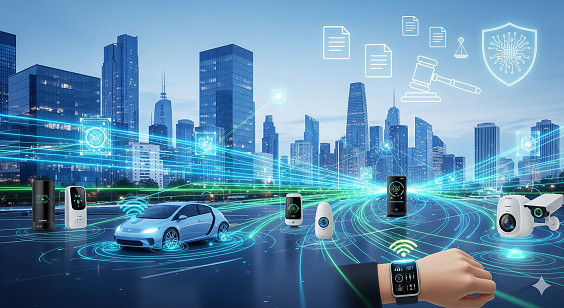
Imagine walking through a smart city. Your self-driving car navigates traffic using real-time data. Your smartwatch monitors your health and alerts you before any issue arises. Even your refrigerator keeps track of its contents and places orders when supplies run low. All of this is made possible by edge computing.
Edge computing is no longer a futuristic concept. It is already transforming how we live, work, and interact with technology. This blog explores why edge computing matters, how it is growing, and how governments around the world are actively shaping its future.
Why Edge Computing Matters
Edge computing allows data to be processed close to the source rather than relying on distant cloud servers. This shift brings several advantages.
- Real-Time Decision Making: It enables instant data processing. This is critical in situations where delays can have serious consequences. For example, a surgeon performing remote surgery needs ultra-low latency to ensure precision. In manufacturing, smart factory lines adjust themselves based on sensor data without waiting for cloud-based instructions. The ability to make decisions in real time is a major benefit.
- Cost Efficiency: Uploading large volumes of data to the cloud requires significant bandwidth and expensive cloud services. Edge computing reduces this need by handling data locally. This leads to lower operational costs and more efficient use of resources. Businesses can save money while maintaining high performance.
- Improved Privacy and Security: Sensitive data stored in the cloud is vulnerable to breaches. Edge computing processes most data locally, reducing exposure to external threats. This is especially important for industries like healthcare, finance, and defense, where data security is a top priority.
- Government-Led Momentum: Governments around the world are recognizing the strategic importance of edge computing. They are investing in infrastructure, issuing policy guidance, and supporting research and development.
United States Initiatives
The United States government is actively involved in securing these systems. The Cybersecurity and Infrastructure Security Agency has released detailed guidance for protecting edge devices such as routers, firewalls, and Internet of Things systems. These documents provide both executive-level and technical recommendations.
The National Institute of Standards and Technology is exploring hybrid quantum-edge computing networks. These networks combine quantum computing with edge systems to improve scalability and security. This research could lead to new models for secure data processing in critical sectors.
The federal Cloud Smart Strategy also promotes the adoption of edge computing across government agencies. It focuses on security, procurement, and workforce development to ensure that edge technologies are implemented effectively.
European Union Programs
The European Commission has approved over one billion euros in funding under the Important Projects of Common European Interest initiative. This funding supports research and industrial deployment of advanced cloud and edge computing technologies across several member states.
The Horizon Europe program has allocated additional funds for pilot projects that integrate edge computing with artificial intelligence and Internet of Things platforms. These projects aim to strengthen Europe’s position in industrial innovation, particularly in sectors like automotive, healthcare, and aerospace.
India’s Digital Infrastructure Push
India is expanding its digital infrastructure to support edge computing. The MeghRaj Cloud Initiative and National Data Centres now offer over one hundred petabytes of storage. These resources are used by more than three hundred government departments.
The Ministry of Electronics and Information Technology and the Department of Telecommunications are promoting emerging technologies, including edge computing, artificial intelligence, and sixth-generation mobile networks. These efforts are aligned with the rollout of fifth-generation mobile networks, which enhance the capabilities of edge systems.
Artificial Intelligence and Machine Learning:
Artificial intelligence and machine learning are being integrated directly into edge devices. Cameras, drones, and sensors are becoming intelligent systems that can analyze data and act independently. For example, a camera can identify objects rather than just record video. A drone can assess crop health while flying over farmland.
In healthcare, edge-enabled devices can monitor patient vitals and alert doctors in real time. This allows for proactive care without waiting for lab results. The integration of robotics and artificial intelligence, sometimes referred to as physical AI, is also advancing. Machines can now perform complex tasks in the physical world with real-time decision-making.
As explained by a senior executive at a leading technology company, physical AI is essential for self-driving vehicles. These vehicles must process sensory data instantly to navigate safely and efficiently. The combination of physical AI and edge computing allows autonomous systems to interpret input, analyze it, and respond without relying on cloud servers.
The Role of Fifth-Generation Networks
Fifth-generation mobile networks are accelerating the adoption of edge computing. These networks offer high speed and low latency, which are essential for real-time applications. Autonomous vehicles, remote inspections, and augmented reality support for field technicians all benefit from these capabilities.
In some cases, fifth-generation networks are not required for basic edge computing tasks. However, they are crucial for applications that demand immediate response. For example, remote technicians can receive real-time augmented reality guidance, making diagnostics and repairs more efficient.
Edge and Cloud Working Together
Edge computing does not replace cloud computing. Instead, it complements it. Edge devices handle real-time processing, while the cloud performs deeper analysis and long-term storage. This hybrid model offers the best of both worlds.
Consider a scenario where edge devices collect data and make quick decisions. The cloud then uses this data for machine learning and system improvements. This approach ensures speed at the edge and depth in the cloud.
Future Applications of Edge Computing
Edge computing is poised to transform many industries. Here are some key areas where it will have a significant impact.
- Smart Cities: As urban areas become more connected, edge computing will help manage traffic, energy use, and public safety. Real-time data processing allows cities to respond quickly to changing conditions. This leads to better resource management and improved quality of life.
- Industry 4.0: Manufacturing is becoming more automated. Edge computing enables machines, robots, and sensors to communicate and adjust operations in real time. This reduces downtime, improves productivity, and lowers costs. Predictive maintenance becomes possible without relying on cloud-based analysis.
- Healthcare Technology: It supports remote monitoring and telemedicine. Wearable devices can process health data locally and alert medical professionals when needed. This allows for early detection of medical conditions and timely intervention. In rural or underserved areas, edge-enabled healthcare can make a significant difference.
- Consumer Devices: Edge computing is enhancing consumer technology. Virtual reality headsets, gaming consoles, and smart appliances are becoming more responsive. These devices can adjust to user behavior and environmental conditions in real time. This leads to smoother and more immersive experiences.
Conclusion
Edge computing is no longer a niche technology. It is becoming a foundational part of digital infrastructure. Governments are investing in its development, industries are adopting it for efficiency and innovation, and consumers are experiencing its benefits in everyday life.
The market is growing rapidly. According to a report by The Insight Partners, the global edge computing market is expected to grow at a compound annual rate of over twenty-three percent between 2023 and 2031. Several factors are driving this expansion.
From smart cities to intelligent machines, it is shaping the future. Its ability to process data locally, respond instantly, and operate securely makes it a powerful tool. As global initiatives continue to support its growth, edge computing will become even more integrated into the way we live and work.