Wireless Audio Devices Just Got a Brain- Thanks to AI
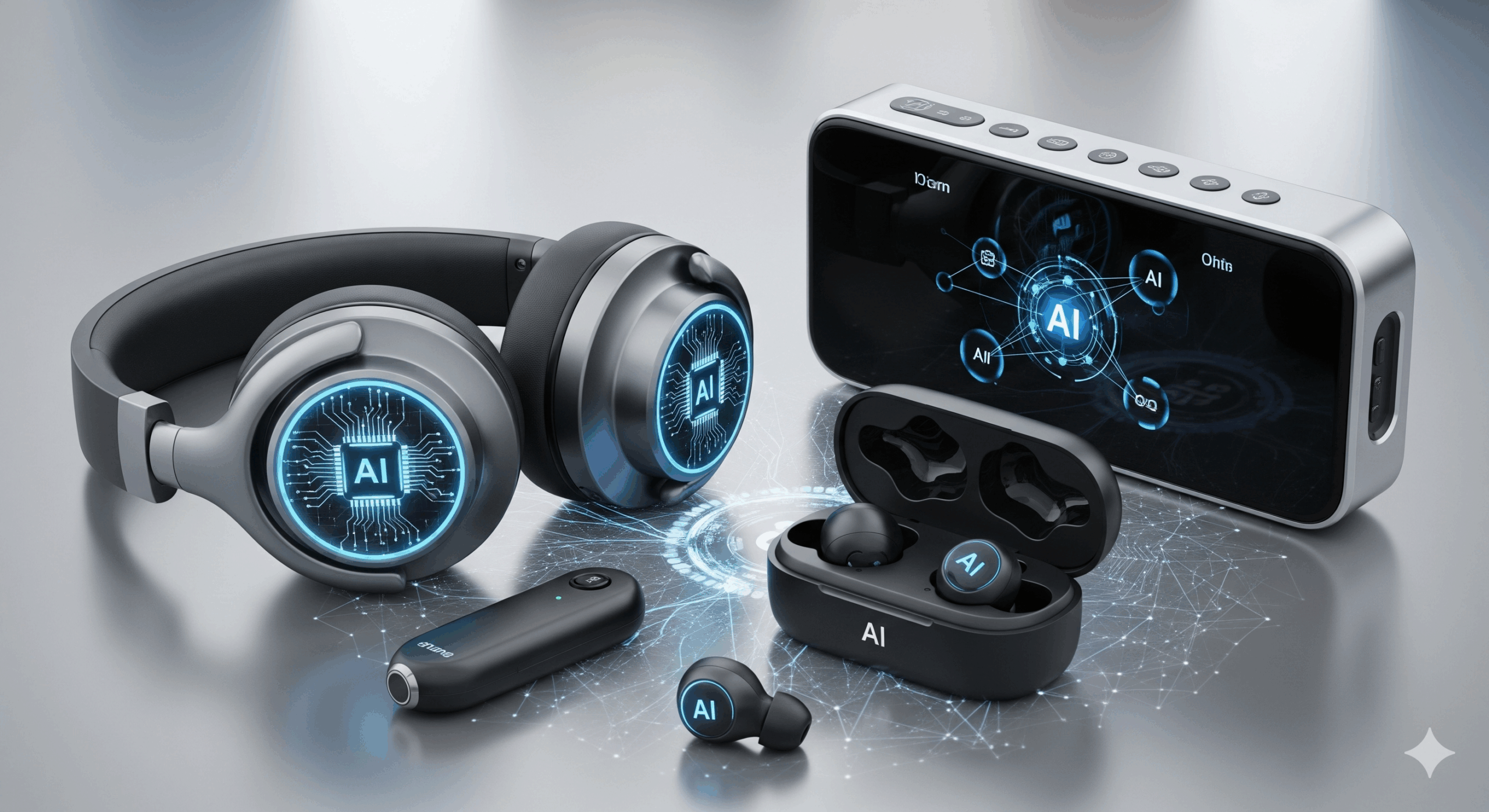
In a world where wires are passé and silence raises eyebrows, wireless audio devices are truly having their moment. However, it’s no longer just about cutting cords. Instead, it’s about becoming smarter, much smarter. These days, Artificial Intelligence (AI) acts as the secret sauce behind your headphones, seamlessly detecting your mood, intuitively adjusting your earbuds to traffic noise, and effortlessly responding to your sass through your speakers. As a result, we’ve entered the era of smart sound, where AI boldly tunes the future of wireless audio with flair, finesse, and a hint of futuristic magic.
Adaptive Sound: Your Audio, Your Environment
Imagine walking from a quiet café into a bustling street. Your music doesn’t just get louder, it adapts. That’s adaptive sound, and it’s one of AI’s coolest tricks in Wireless Audio Devices.AI algorithms analyze ambient noise in real time. They adjust volume, equalizer settings, and even noise cancellation levels. You don’t lift a finger. Your earbuds become your personal sound engineers, constantly tweaking your audio experience based on your surroundings.
This isn’t just convenient, it’s revolutionary. Adaptive sound makes wireless audio feel alive. It responds, reacts, and evolves. Whether you’re jogging through a park or stuck in a subway, your sound stays seamless.
Voice Recognition: Talk to Your Tech
Let’s be honest, talking to your gadgets used to feel awkward. Now, however, it feels empowering. Thanks to AI-driven voice recognition, wireless audio devices are becoming true conversationalists. Voice assistants like Siri, Alexa, and Google Assistant no longer act as passive listeners. Instead, they understand context, interpret tone, and even catch hints of sarcasm (well, almost). As a result, you can ask for your favorite playlist, check the weather, or send a text, all without lifting a finger.
Moreover, the technology goes even deeper. Today’s AI models recognize individual voices, meaning your earbuds know it’s you speaking, not your nosy roommate. This level of personalization adds both security and intimacy to your audio experience.
Machine Learning: The Brain Behind the Beats
AI isn’t just a buzzword anymore; rather, it’s a brain, and that brain runs on machine learning. Every time you skip a song, adjust the volume, or request a podcast, your wireless audio devices actively learn. As a result, they build a profile of your preferences, predict what you want to hear next, and even suggest content based on your mood, the time of day, or your location. In effect, it’s like having a personal DJ who knows you better than your best friend.
Moreover, machine learning also powers predictive noise cancellation. Your headphones don’t merely block sound, they anticipate it. They recognize patterns in your environment and adjust preemptively. In turn, this creates proactive audio, not reactive.
Personalized Audio: One Size Doesn’t Fit All
Gone are the days of generic sound profiles. AI enables Wireless Audio Devices to deliver personalized audio experiences. Think of it as tailoring sound to your ears, literally.
Some devices use ear scans or hearing tests to create custom sound maps. Others adjust frequencies based on age-related hearing loss. The result? Audio that’s optimized for you, not the average listener. This personalization isn’t just about luxury; it’s about accessibility. AI makes wireless audio more inclusive, ensuring everyone gets the best possible experience, regardless of hearing ability.
Smarter Battery Management: More Music, Less Charging
Let’s talk power. AI is helping Wireless Audio Devices become more energy-efficient. Smart algorithms manage battery usage based on your habits. If you usually listen to music during your commute, your earbuds conserve energy during idle hours. If you forget to turn off your headphones, AI steps in. It’s like having a battery butler who knows your schedule.
Some devices even use AI to predict battery drain and suggest charging times. You get more playtime, fewer interruptions, and less anxiety about running out of juice mid-song.
Emotion Recognition: Your Headphones Feel You (Sort Of)
Sure, your headphones don’t actually feel emotions, but they’re getting close. Thanks to advances in AI, emotion recognition through voice tone and speech patterns is becoming a reality. For example, imagine saying, “Play something chill,” and your earbuds detect stress in your voice. In response, they play calming music. Or, if they pick up on excitement, they might queue up a party playlist instead. In this way, AI transforms audio into something more like therapy.
Although this feature is still evolving, it already points toward a future where wireless audio devices act as emotional companions. They won’t just play music, they’ll play the right music.
Connectivity and Ecosystem Intelligence
In addition to personalizing your listening experience, AI also enhances how wireless audio devices interact with other gadgets. For instance, your earbuds recognize when your phone rings, your smartwatch buzzes, or your laptop initiates a Zoom call. Consequently, they switch seamlessly between devices, prioritize audio streams, and even pause your music the moment you remove one earbud. In essence, it’s not just smart, it’s intuitive. Furthermore, this ecosystem intelligence transforms wireless audio into part of a larger digital symphony, where everything works together smoothly, all thanks to AI’s behind-the-scenes coordination.
Privacy and Ethics: The Sound of Responsibility
With great intelligence, however, comes great responsibility. As AI becomes more integrated into wireless audio devices, it inevitably raises important questions about data privacy. After all, features like voice recognition, emotion detection, and personalized experiences all depend on user data. Therefore, manufacturers must prioritize transparency. Users deserve to know what data is collected, how it’s used, and how it’s protected. In this context, ethical AI isn’t just a trend; it’s a necessity.
Fortunately, many brands are rising to the challenge. They now offer opt-in features, encrypted data storage, and clear, accessible privacy policies. In the end, smart sound should enhance the experience, not compromise user trust.
Final Thoughts: The Future Sounds Smart
AI is transforming Wireless Audio Devices from passive tools into active partners. They listen, learn, and adapt. They make sound smarter, smoother, and more personal. As technology evolves, we’ll see even more innovations, spatial audio that adjusts to head movement, earbuds that translate languages in real time, and headphones that double as health monitors.
The future of wireless audio isn’t just loud, it’s intelligent. And thanks to AI, it’s tuned perfectly to you.