AI-Powered Robotic Farming Upgrades Sustainable Agriculture
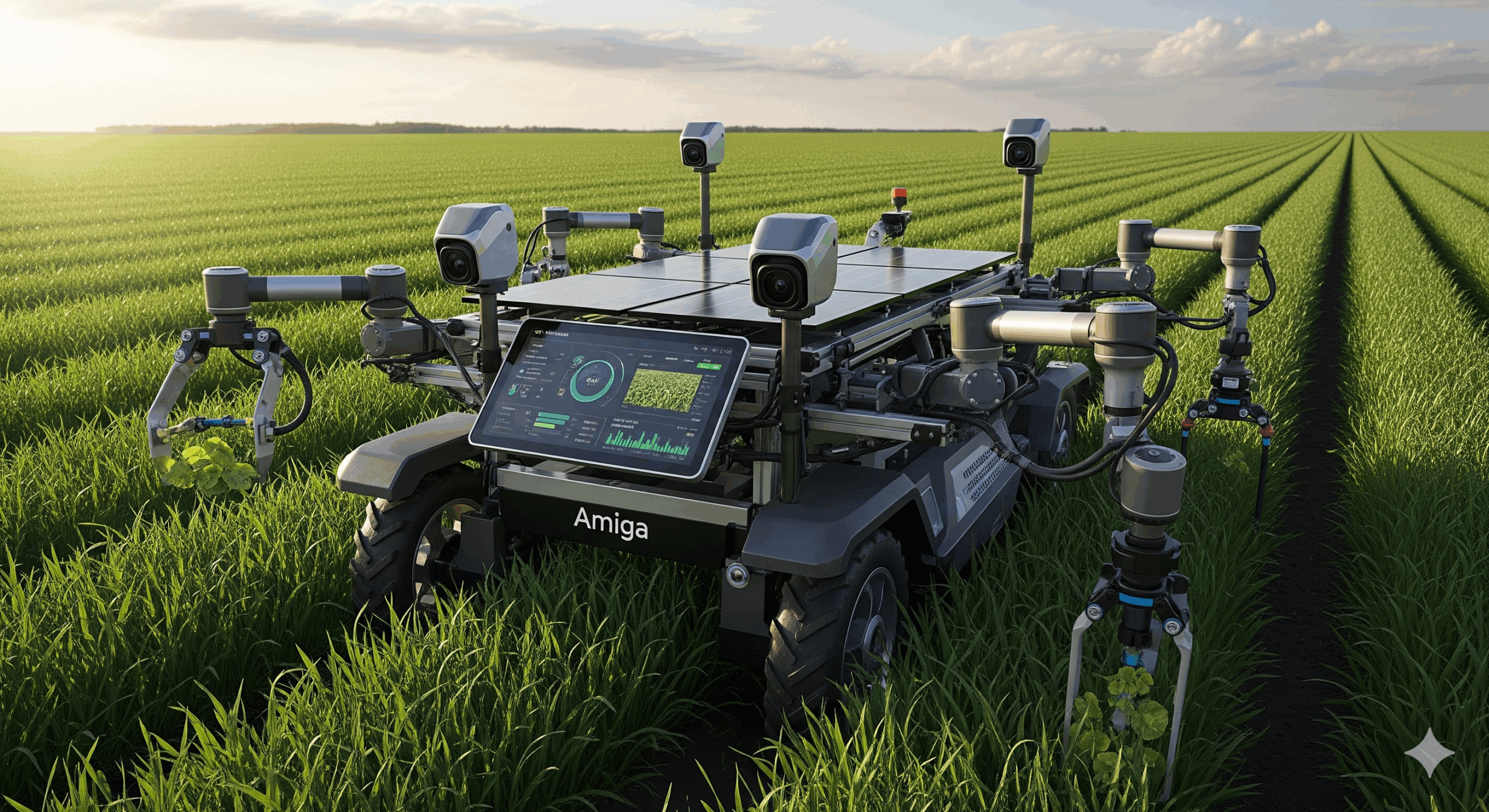
AI-powered robotic farming tool now leads the industry. Bonsai Robotics acquired farm-ng. This move combines two agtech leaders. They share a vision for the future. Indeed, they aim to solve major farming challenges. These include labor, cost, and efficiency. Furthermore, this partnership brings together software and hardware expertise. This integration creates “AI-first machines.” These machines will transform crop management.
The combined company offers cost-effective solutions. In fact, these solutions work for diverse crops. For example, they can handle many different tasks. They work in various environments. Bonsai’s CEO, Tyler Nida, spoke about the change. He explained their vision. They wanted to make AI accessible. It should be easy for all to use. Their goal was to deploy it across all farm equipment. This includes retrofitted tractors. It also includes new-generation machines. The acquisition makes this possible. The company now develops those next-generation machines. These new machines will augment today’s workforce. They also optimize farm productivity.
We are shifting from iron to intelligence. In addition, the two companies had a history. They collaborated on many projects. Therefore, this integration builds on that strong partnership. It positions the new company for fast growth. The combined team has deep expertise. They know agriculture, robotics, and AI. They also have engineering knowledge. Specifically, the new COO is John Teeple. He was a technology director at John Deere. Gary Bradski is another key figure. He founded OpenCV. He will be the new Chief Science Officer. This team addresses difficult integration tasks. For instance, they must integrate hardware and perception. They must handle unpredictable farm environments.
The new unified platform is complementary. It works with their OEM partners. As a result, it handles different form factors. This includes varied crop types and geographies. Thus, it delivers effective autonomy. The financial details were not disclosed. In conclusion, existing shareholders retain their stakes. The new entity is called Bonsai Robotics. Former CEO Brendan Dowdle is now the Chief Business Officer. He believes in making tools that just work. He says they can now move faster. They help growers adopt transformative tools. These tools improve the bottom line. The two companies’ cultures were a great fit. They value practical, real-world results. They prefer time in the field.
Consequently, you will soon see farming machines running Bonsai autonomy. This is a thoughtful approach that ultimately benefits the customer. Therefore, their tools are getting better, and the experience is also more connected. To illustrate, Bonsai had a great first year with many successful deployments. Meanwhile, farm-ng had exponential growth.
The AI-powered robotic farming tool Amiga is a great example. It can perform many different tasks because it uses an open-source platform. Furthermore, it is fully electric, which helps growers save money by reducing labor and fuel costs. The Amiga is highly agile and can turn in place; therefore, it is easy to maneuver. It also has a lightweight design, thus minimizing soil compaction.
In addition, the robot runs for up to 8 hours on a single charge. Its swappable batteries are inexpensive, so it can work all day. This AI-powered robotic farming tool is also very powerful—it can haul up to 800 lbs, tow up to 1,500 lbs, and lift to 600 lbs. This adaptability helps growers streamline their operations.
The robot also has an Intelligence Kit, which is powered by NVIDIA and brings real-time decision-making. It has smart cameras and sensors, so growers can collect data and get actionable insights. This AI-powered robotic farming tool improves crop management by optimizing input usage.
In conclusion, the partnership will bring more of these innovations. This AI-powered robotic farming tool is at the forefront of change, providing farming solutions as the industry enters a new era that combines sustainability and technology. The AI-powered robotic farming tool is helping to improve yields, conserve resources, and protect crops against climate risks. This is a big step forward.