Alzheimer’s Detection: New UK Test Identifies High-Risk Patients
A new test is now providing fresh hope for Alzheimer’s patients. This UK-based, three-minute test uses brainwave technology. It helps pinpoint individuals. These people face a greater risk of the condition. The tool was developed by researchers. They worked at the University of Bath. Furthermore, they collaborated with the University of Bristol. This new test could completely revolutionize diagnostics. It could identify problems with Alzheimer’s much earlier. This is a significant development in medical science.
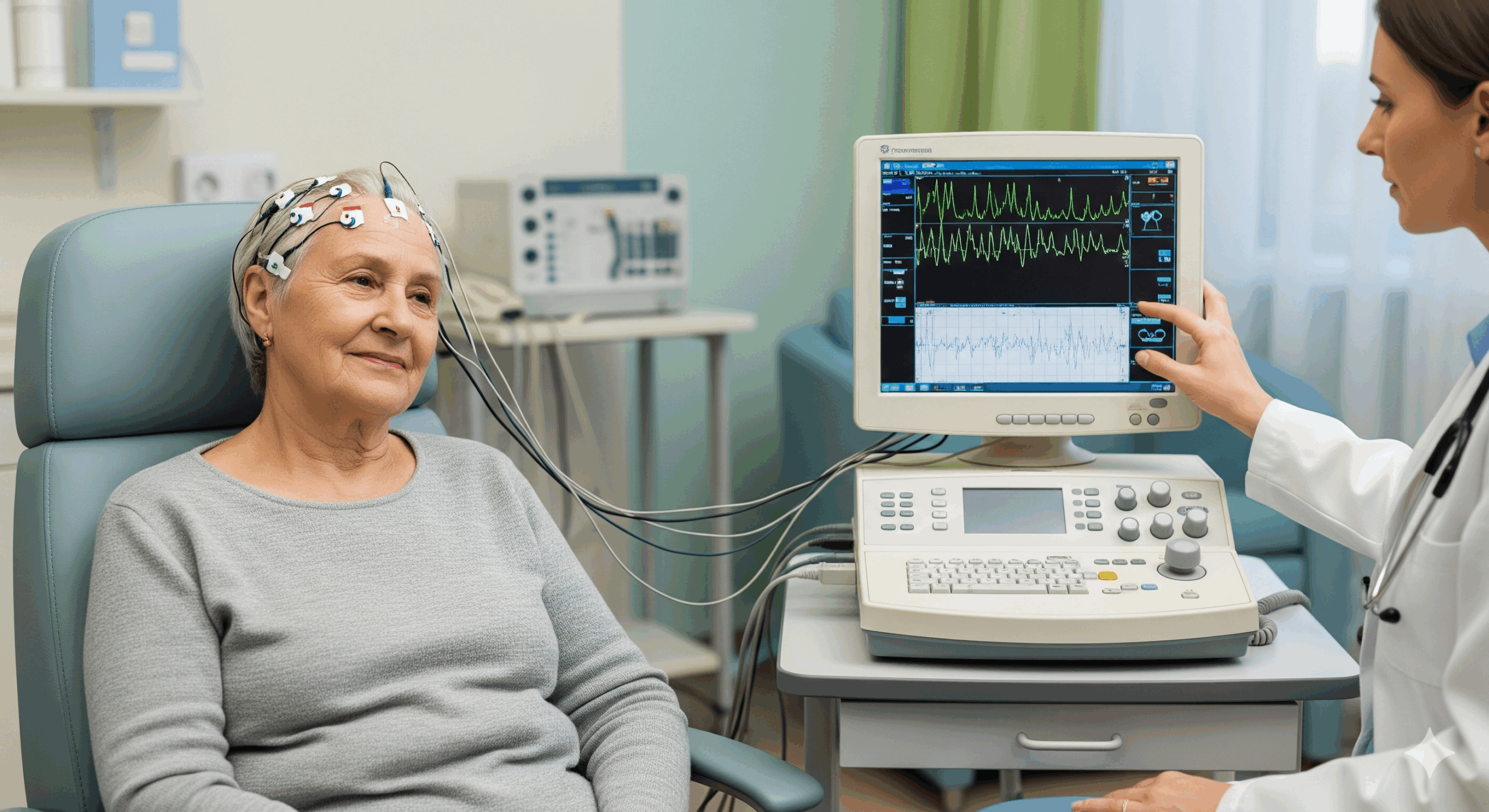
The new technology is called “Fastball.” It functions as an electroencephalogram, or EEG. Small sensors are placed on the scalp. These sensors record the brain’s electrical signals. Participants look at a stream of images. The images flash by very quickly. Fastball measures the brain’s passive responses. It does not require active memory tasks. Therefore, it is a very objective method. Its simple design makes it more accessible. Many people can now get this screening. This will help with early diagnosis of Alzheimer’s.
A recent trial involved 52 patients. They suffered from mild cognitive impairment. Also, 54 healthy older adults participated. Mild cognitive impairment, or MCI, is a decline. It affects memory and thinking skills. But it does not prevent a person from their daily life. Researchers noted a clear difference. Those with amnestic MCI showed reduced responses. This type of MCI mainly affects object memory. These individuals are much more likely to develop Alzheimer’s disease. So, the Fastball test was able to flag this specific risk.
Dr. George Stothart, a cognitive neuroscientist and lead investigator on the study at the University of Bath, noted that current diagnostic tools often miss the crucial early stages of the disease. In fact, he says they often miss the first ten to twenty years of Alzheimer’s development. “Fastball offers a new opportunity,” he stated, providing earlier and more objective detection. Furthermore, the test is both cheap and portable, so doctors can use it in a home setting. Consequently, this increases access for many and marks a very important step forward.
The Alzheimer’s Society has reported that many people with dementia in the UK remain undiagnosed. For instance, while around 982,000 people have the condition, more than a third of them have no formal diagnosis. Experts predict this number could rise to 1.4 million by 2040. Therefore, Fastball provides real hope by offering a solution to this problem. Early intervention can make a big difference, helping people access support, which is why an early diagnosis of Alzheimer’s is a key goal.
Dr. Julia Dudley at Alzheimer’s Research UK said many families need answers. She believes an early and accurate diagnosis is critical because it allows people to get proper care and support. Moreover, it gives them access to new treatments. Although the initial trial findings are encouraging, researchers still need larger, long-term studies. They will confirm these initial results and show if the test can predict the disease’s progression, which is a very crucial next step.
The test does not provide a definitive diagnosis. However, it helps doctors find a high-risk group that might benefit from new therapies. With new drugs like donanemab and lecanemab on the horizon, the test can help people get treatment sooner. Ultimately, this makes a formal diagnosis of Alzheimer’s much easier to deliver and provides hope for countless individuals.