First Oral HER2 NSCLC Therapy Zongertinib Wins FDA Approval
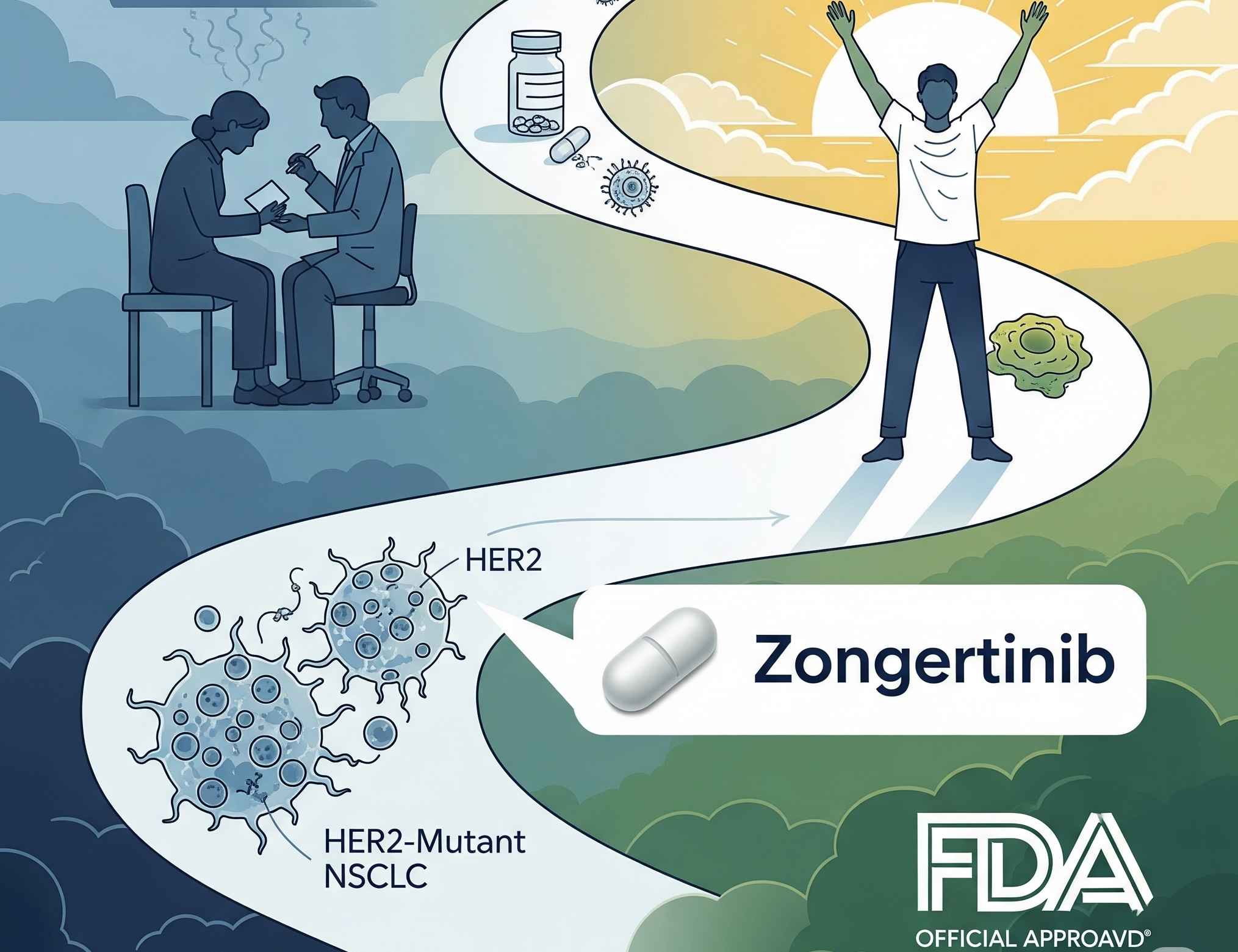
New York | August 14, 2025 — The U.S. Food and Drug Administration (FDA) has granted accelerated approval to zongertinib (Hernexeos, Boehringer Ingelheim Pharmaceuticals, Inc.). This approval introduces the first oral targeted therapy for adults with unresectable or metastatic non-squamous non-small cell lung cancer (NSCLC) that involves HER2 (ERBB2) tyrosine kinase domain (TKD) activating mutations.
The Phase Ib Beamion LUNG-1 trial (NCT04886804) provided the data supporting this decision. Researchers observed strong clinical activity in patients who had already received systemic therapy.
The FDA also approved the Oncomine Dx Target Test (Life Technologies Corporation) as a companion diagnostic. This test identifies HER2 TKD mutations and helps physicians choose eligible patients for treatment.
In one trial group, 75% of patients responded to zongertinib after prior platinum-based chemotherapy without HER2-directed therapy. Among those responders, 58% maintained benefits for at least six months.
In another group previously treated with both platinum-based chemotherapy and HER2-targeted drugs, 44% of patients responded. Of those, 27% had responses lasting longer than six months.
Researchers reported a median progression-free survival (PFS) of 12.4 months. The median duration of response (DOR) reached 14.1 months, showing the drug’s potential for long-term benefit.
Doctors prescribe the dose based on body weight:
- 120 mg once daily for patients under 90 kg
- 180 mg once daily for those weighing 90 kg or more
Patients may take zongertinib with or without food. Treatment continues until the disease progresses or side effects become unacceptable.
HER2 mutations occur in just 2–4% of NSCLC cases but often lead to aggressive tumor behavior. Clinicians have emphasized the need for comprehensive molecular profiling, including next-generation sequencing, to personalize treatment.
The ongoing Phase III Beamion LUNG-2 trial (NCT06151574) will determine whether zongertinib earns full FDA approval. This trial compares the drug’s effectiveness against standard therapies.
This milestone redefines HER2-mutant NSCLC care. It also reflects how precision oncology is reshaping treatment by matching therapies to individual tumor genetics.